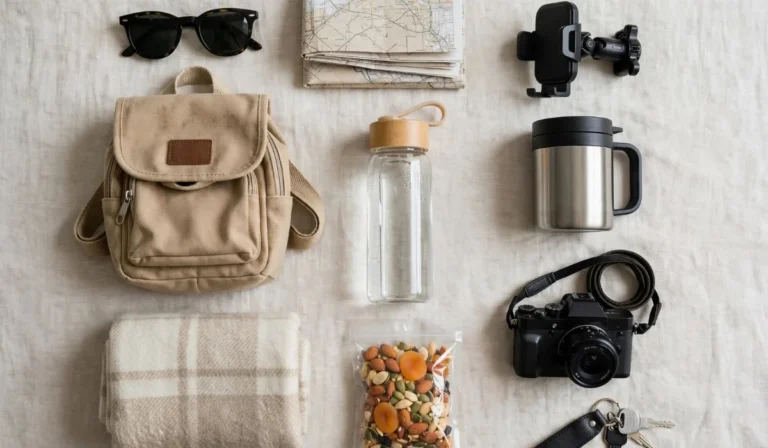
20 Road Trip Car Set Up | Smart Ideas for a Comfortable Journey
A well-planned road trip car setup can make a huge difference to your travel experience. Whether you are heading out for a weekend getaway, taking a family vacation, or driving across several cities, an organized vehicle makes the journey safer, more comfortable, and less stressful.
Without a proper setup, bags can become difficult to access, snacks can spill, passengers can feel uncomfortable, and important safety equipment may be buried under luggage. The solution is simple: organize your car before you leave and give every essential item a specific place.
This guide covers 20 road trip car setup ideas to help you prepare your vehicle for long drives. It includes storage solutions, comfort items, safety equipment, entertainment, food organization, and practical tips for different types of road trips.
Road Trip Car Setup: What You Need to Know
Before organizing your vehicle, think about three priorities:
- Safety – Make sure emergency and safety equipment is accessible.
- Comfort – Give passengers enough space and provide useful travel accessories.
- Organization – Store frequently used items where they are easy to reach.
A good setup should also avoid blocking the driver’s view, pedals, airbags, or controls. The National Highway Traffic Safety Administration (NHTSA) provides extensive vehicle-safety information for drivers and passengers.
20 Road Trip Car Setup Ideas:
1. Clean the Car Before Packing

Start your road trip car setup with a clean and empty vehicle.
Remove unnecessary items from the trunk, door pockets, glove compartment, and back seats. Vacuum the floor and wipe down surfaces.
Cleaning first gives you a blank canvas for organizing your travel gear. It also helps you discover useful storage spaces that may have been hidden by clutter.
Before packing, remove:
- Old receipts
- Empty bottles
- Unused shopping bags
- Unnecessary tools
- Trash
- Items that could move around while driving
A clean vehicle is easier to organize and more pleasant for everyone.
2. Create a Dedicated Emergency Kit
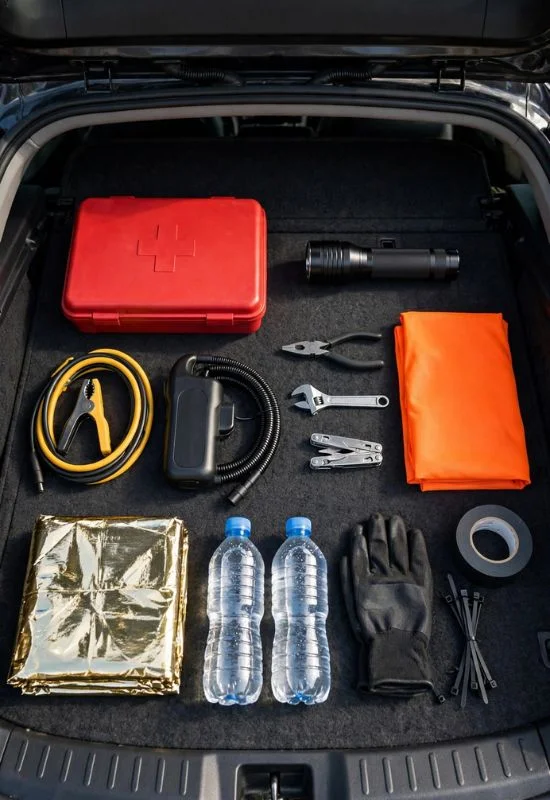
Your emergency kit should have a clearly defined location and remain easy to access.
Include items such as:
- Flashlight
- First-aid kit
- Jumper cables
- Tire pressure gauge
- Work gloves
- Basic tools
- Reflective warning equipment
- Emergency blanket
- Water
- Nonperishable food
The NHTSA recommends carrying an emergency roadside kit containing useful supplies for unexpected vehicle problems.
Do not bury the kit beneath heavy luggage. If you need it, you should be able to reach it quickly.
3. Use a Trunk Organizer

A trunk organizer is one of the simplest ways to improve your road trip car setup.
Instead of allowing emergency supplies, cleaning products, snacks, and miscellaneous items to roll around, divide them into separate compartments.
Use different sections for:
- Emergency equipment
- Cleaning supplies
- Food
- Tools
- Outdoor equipment
A collapsible organizer is particularly useful because it can be folded when you are not using it.
4. Pack Luggage Strategically
Place heavier luggage at the bottom and lighter bags on top.
Keep the weight distributed rather than putting everything on one side of the trunk.
Frequently used bags should be positioned where they can be accessed without removing the entire stack.
For overnight stops, keep a small overnight bag near the top instead of opening every suitcase at the hotel.
5. Create a Front-Seat Essentials Zone
The front-seat area should contain only items that the driver or front passenger genuinely needs.
Useful items include:
- Sunglasses
- Charging cable
- Phone mount
- Water bottle
- Tissues
- Navigation backup
- Hand sanitizer
Avoid filling the dashboard or passenger footwell with loose objects.
The driver should have an unobstructed view and unrestricted access to pedals and controls.
6. Install a Secure Phone Mount
A phone mount can make navigation easier while keeping the device in a fixed position.
Use voice commands or set your route before driving whenever possible.
Never hold or manually operate your phone while driving. The NHTSA’s distracted driving guidance emphasizes the dangers of taking attention away from the road.
A secure mount is useful, but it does not make manually interacting with a phone while driving safe.
7. Set Up a Charging Station
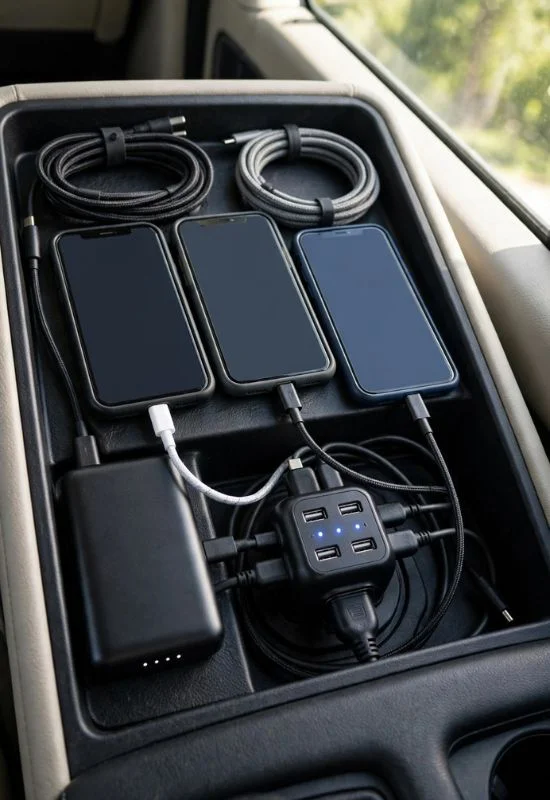
Long road trips often involve multiple phones, tablets, cameras, and other devices.
Create a simple charging station with:
- Car charger
- Multi-port USB adapter
- Charging cables
- Power bank
- Cable organizer
Label cables if several family members use different devices.
Keep charging cables organized rather than allowing them to become tangled around seats or gear.
8. Create a Passenger Snack Station
A dedicated snack area can reduce interruptions during long drives.
Use a small cooler or container for:
- Water
- Fruit
- Sandwiches
- Granola bars
- Crackers
- Nuts
- Dried fruit
Choose foods that are easy to handle and unlikely to create a major mess.
Passengers should be able to access snacks safely without distracting the driver.
9. Use a Small Cooler
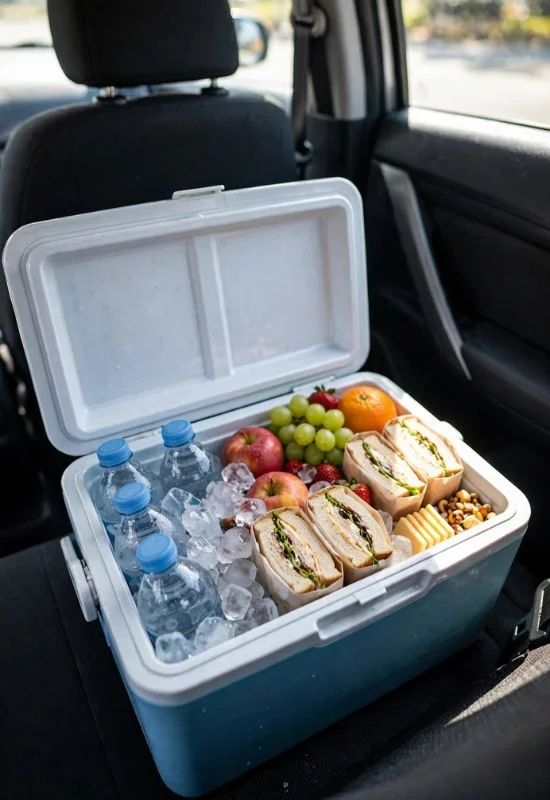
A cooler is especially useful for family road trips.
It can hold cold drinks, fruit, sandwiches, and other perishable foods.
Place the cooler where it can remain upright and secure. Do not allow it to roll around the vehicle.
For food safety, the U.S. Department of Agriculture recommends keeping perishable food cold during transportation and using appropriate cold-storage methods.
Read Next: 20 White Water Rafting Tips
10. Add Backseat Organizers
Backseat organizers provide convenient storage for passengers.
They can hold:
- Books
- Coloring supplies
- Headphones
- Tablets
- Water bottles
- Tissues
- Small toys
- Travel games
For children, an organizer can become their personal travel station.
Choose one that attaches securely to the seat and does not interfere with the driver’s visibility.
11. Prepare a Kids’ Activity Area
If children are traveling with you, create an organized activity space.
Keep a small selection of:
- Coloring books
- Crayons or colored pencils
- Puzzle books
- Sticker books
- Travel games
- Headphones
- Notebooks
Avoid giving children too many items at once. Rotate activities throughout the journey to maintain interest.
12. Make a Comfortable Sleeping Setup
For long trips, passengers may want to sleep during the journey.
Useful comfort items include:
- Travel pillows
- Small blankets
- Eye masks
- Comfortable clothing
- Window shades
However, never allow passengers to sleep in a position that interferes with their seat belt or places them outside the vehicle’s intended seating position.
Children should always use age- and size-appropriate restraints. The NHTSA’s child passenger safety guidance explains how car seats and booster seats help protect young passengers.
13. Set Up a Trash System
A small trash container or reusable trash bag can keep the car clean.
Place one where passengers can easily reach it.
Use separate bags if you want to divide:
- Food waste
- Recyclables
- Wet items
- General trash
Empty the trash at rest stops rather than allowing it to accumulate.
14. Keep a Hygiene Station
A small hygiene bag is especially useful during long trips.
Include:
- Hand sanitizer
- Wet wipes
- Tissues
- Paper towels
- Disposable bags
- Toothbrushes
- Basic toiletries
Keep the bag accessible instead of burying it in luggage.
The CDC recommends hand hygiene during travel, including washing hands with soap and water or using an alcohol-based hand sanitizer when soap and water are unavailable.
15. Create a Navigation Backup
GPS is convenient, but your road trip car setup should include a backup navigation option.
Before departure:
- Download offline maps
- Save important addresses
- Mark fuel stations
- Save accommodation details
- Keep a physical map
- Write down emergency contacts
This is especially important when traveling through areas where mobile coverage may be limited.
16. Organize Important Documents
Keep essential documents together in a secure folder.
Depending on your trip, these may include:
- Driver’s license
- Vehicle registration
- Insurance information
- Hotel reservations
- Travel confirmations
- Emergency contacts
Make digital backups of important documents when appropriate.
Avoid leaving sensitive documents visible inside the car when you are away from it.
17. Use Seat-Back or Floor-Level Storage Carefully
Storage can make a vehicle more organized, but safety must come first.
Do not place loose objects where they can interfere with:
- Pedals
- Seat belts
- Airbags
- Driver visibility
- Emergency exits
Heavy objects should be secured rather than left loose.
During sudden braking, an unsecured object can move unexpectedly.
18. Prepare a Roadside Repair Area
If you have enough trunk space, keep basic vehicle equipment together.
A practical roadside equipment section can include:
- Spare tire
- Jack
- Lug wrench
- Tire pressure gauge
- Jumper cables
- Gloves
- Flashlight
- Basic tools
Check that your spare tire is properly inflated before leaving.
For additional vehicle preparation advice, consult the NHTSA’s vehicle maintenance guidance.
19. Set Up a Comfort Zone for the Front Passenger
The front passenger can act as the trip organizer.
Give them easy access to:
- Route information
- Snacks
- Water
- Charging cables
- Sunglasses
- Tissues
- Reservations
- Entertainment controls
This can reduce unnecessary distractions for the driver.
The front passenger can also help monitor directions, communicate with other passengers, and organize upcoming stops.
20. Prepare the Car for Weather
Your road trip car setup should match the weather and destination.
For hot weather, consider:
- Extra drinking water
- Sunglasses
- Sun protection
- Window shades
- Cooler
- Lightweight clothing
For cold weather, consider:
- Warm clothing
- Blankets
- Gloves
- Extra food and water
- Appropriate emergency equipment
For rainy conditions, keep:
- Rain jackets
- Umbrellas
- Towels
- Waterproof bags
Check weather and road conditions before departure and during the trip.
How to Arrange a Road Trip Car
Once you have your supplies, use a simple organization system.
Front Area
Keep the front area clean and focused on driving.
Store only essential items such as:
- Phone mount
- Sunglasses
- Charging cable
- Water bottle
- Navigation information
Backseat Area
Use backseat organizers for passenger supplies.
Children can have their own activity section, while adults can store books, headphones, and personal items.
Trunk Area
Divide the trunk into categories.
Section 1: Emergency equipment
Section 2: Luggage
Section 3: Food and cooler
Section 4: Outdoor or activity equipment
Keep emergency equipment accessible.
Road Trip Car Setup Safety Tips
Secure Loose Items
Do not leave heavy bags, bottles, electronics, or tools loose inside the passenger area.
Secure luggage properly so it does not shift during sudden braking.
Keep the Driver’s Area Clear
The driver’s attention should remain on driving.
Never place objects where they can block the windshield, mirrors, pedals, or controls.
Check Your Vehicle Before Leaving
Inspect:
- Tires
- Lights
- Brakes
- Fluids
- Battery
- Wipers
- Spare tire
If your vehicle requires maintenance, complete it before the journey.
Take Regular Breaks
Long-distance driving can cause fatigue.
Plan rest stops where you can safely stretch, eat, use the restroom, and take a break.
NHTSA recommends taking breaks during long trips and avoiding driving when tired.
Road Trip Car Setup for Families
Family travel requires extra organization.
Create separate areas for:
- Baby supplies
- Children’s activities
- Snacks
- Clothing
- Hygiene products
- Emergency supplies
Pack extra clothes for young children because spills and unexpected messes are common.
Keep diapers, wipes, snacks, and other frequently used items within easy passenger access.
Road Trip Car Setup for Couples
Couples can keep the setup simpler.
Focus on:
- Comfortable seating
- Shared snacks
- Water bottles
- Charging equipment
- Navigation
- Travel documents
- Music
- Camera
- Emergency kit
A small trunk organizer and packing cubes can keep everything tidy without taking up too much space.
Final Road Trip Car Setup Checklist
Before you leave, check your vehicle and organization system:
-
Clean the vehicle
-
Inspect tires
-
Check fluids
-
Check lights and wipers
-
Pack an emergency kit
-
Pack a first-aid kit
-
Organize the trunk
-
Secure luggage
-
Prepare snacks and water
-
Set up charging cables
-
Install a secure phone mount
-
Prepare navigation backups
-
Pack important documents
-
Create a trash system
-
Prepare hygiene supplies
-
Add children’s activities if needed
-
Pack weather-appropriate gear
-
Check child restraints
-
Review your route
-
Plan rest stops
FAQs About Road Trip Car Setup
How should I set up my car for a road trip?
Start by cleaning the vehicle and checking its basic condition. Then organize luggage, emergency supplies, food, electronics, hygiene items, and passenger entertainment. Keep frequently used items accessible and secure loose objects.
What should I keep in my car for a long road trip?
Keep an emergency roadside kit, first-aid kit, spare tire equipment, flashlight, water, food, phone charger, navigation backup, important documents, and basic hygiene supplies.
How do I organize my trunk for a road trip?
Use a trunk organizer and divide items into categories. Keep emergency equipment accessible, place heavy luggage securely at the bottom, and put frequently used bags where they can be reached easily.
How can I make my car more comfortable for a long road trip?
Use comfortable clothing, travel pillows, small blankets, window shades, water bottles, organized snacks, and regular rest stops. Make sure comfort items never interfere with seat belts or vehicle safety equipment.
How do I organize a car for a family road trip?
Give each passenger a dedicated storage area. Use backseat organizers for children’s activities, keep snacks accessible, and store emergency supplies separately. Pack extra clothing and hygiene supplies for young children.
Where should I put the emergency kit in my car?
Store it somewhere that can be accessed without unpacking the entire vehicle. The trunk or another secure, easily reachable storage area is often practical, depending on the vehicle.
What should I do before taking a long road trip?
Check your tires, fluids, lights, brakes, battery, wipers, and spare tire. Review the route and weather, prepare emergency supplies, charge your devices, and plan regular rest stops.