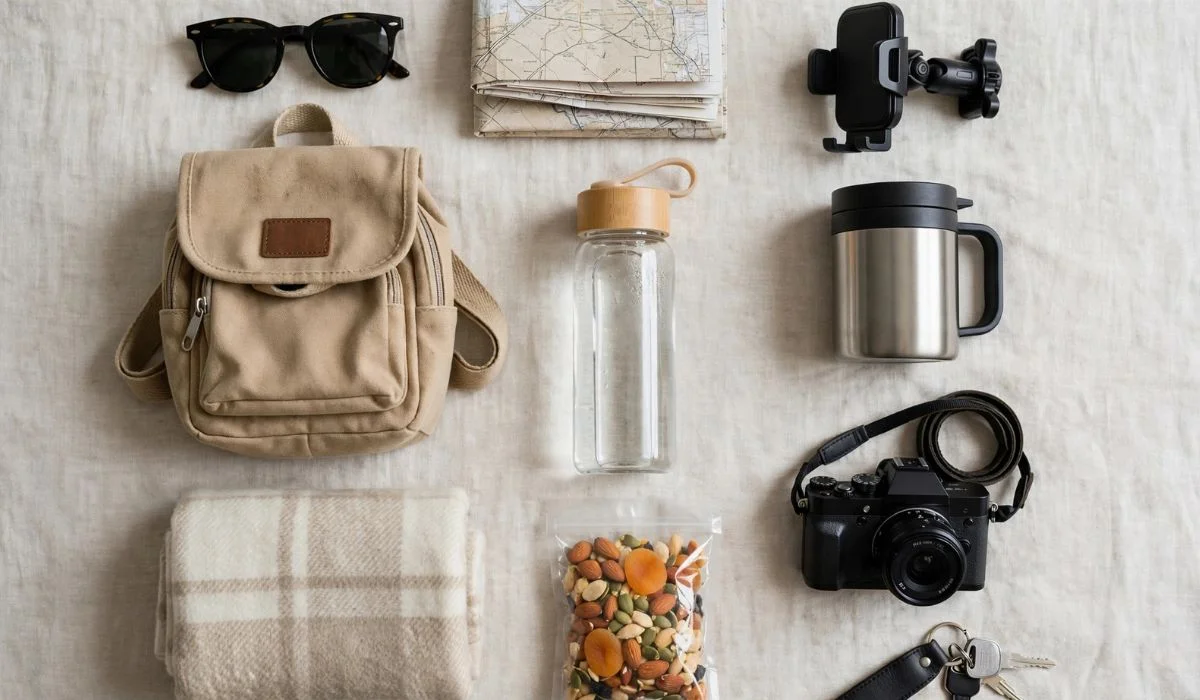
15 Things To Bring On A Road Trip | Essential Items
A great road trip is easier when you’re prepared for the unexpected. Whether you’re planning a weekend getaway, a family vacation, or a long-distance adventure, knowing what to bring on a road trip can save you time, money, and unnecessary stress.
The right packing list depends on your destination, trip length, weather, and who you’re traveling with. Still, a few essentials belong in almost every vehicle, from navigation tools and emergency supplies to snacks, entertainment, and personal items.
Use this guide to build a practical road trip packing list without filling your car with things you probably won’t need.
15 Things To Bring On A Road Trip | Essential Items:
1. Important Travel Documents

Before packing clothes or snacks, make sure you have the documents you’ll need for the journey.
Driver’s License and Identification
Keep your driver’s license or other required identification somewhere easily accessible. If multiple people will drive, make sure each driver has their required documents.
Vehicle and Travel Documents
Bring your vehicle registration, insurance information, roadside assistance details, and any hotel or attraction reservations. Digital copies can be helpful, but having access to important information offline is a smart backup.
2. Navigation and Road Trip Technology
Even if you know the route, reliable navigation tools can make a long drive much easier.
Smartphone and Navigation Apps
Your phone can provide directions, traffic updates, weather information, and information about nearby restaurants, gas stations, and accommodations. Download maps for areas where mobile service may be limited.
Car Charger and Power Bank
A dead phone can become a serious inconvenience during a road trip. Bring a car charger and charging cables for the devices you’ll use throughout the journey.
A power bank can provide additional backup when you’re away from the vehicle or when your car isn’t running.
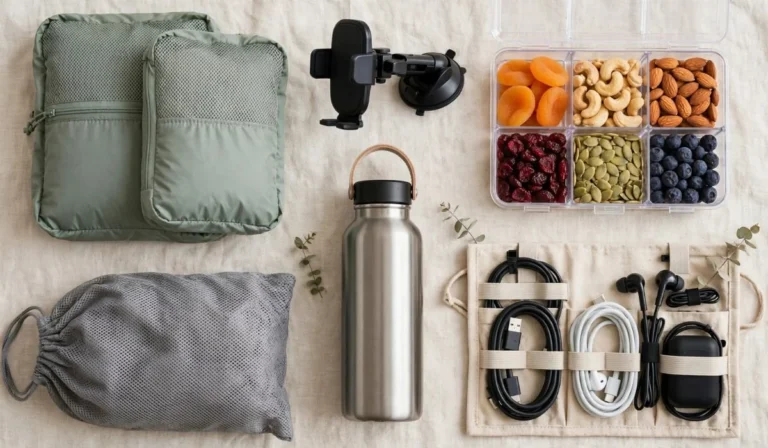
Phone Mount
A secure dashboard or windshield phone mount lets you use navigation without constantly holding your phone. Position it where it can be viewed safely without obstructing your vision.
3. Emergency and Safety Supplies
A road trip can take you through remote areas where help may not be immediately available. A basic emergency kit is worth the space it takes.
First-Aid Kit
A compact first-aid kit can include adhesive bandages, antiseptic wipes, gauze, medical tape, and other basic supplies. Add any personal items your group may need.
Emergency Roadside Kit
Consider bringing:
- Flashlight
- Extra batteries
- Reflective warning gear
- Jumper cables
- Tire pressure gauge
- Basic tools
- Work gloves
- Emergency blanket
The exact equipment you need may depend on your vehicle and the type of roads you’ll be traveling.
Spare Tire and Tire Equipment
Check that your spare tire is properly inflated before leaving. Make sure you also have the necessary jack and tools for changing a tire.
If your vehicle doesn’t have a conventional spare, understand how its tire repair or inflation system works before starting your trip.
4. Food and Drinks
Road trip snacks are more than just a treat. They can help you avoid unnecessary stops when you’re hungry between destinations.
Easy Road Trip Snacks
Choose foods that are easy to eat and unlikely to create a mess. Good options include:
- Granola bars
- Trail mix
- Crackers
- Dried fruit
- Fresh fruit
- Sandwiches
- Popcorn
- Protein bars
Pack snacks in individual containers or resealable bags so everyone can grab what they want without digging through the entire car.
Plenty of Water
Bring reusable water bottles for everyone traveling. A cooler can help keep drinks and perishable foods cold during longer journeys.
Don’t rely entirely on convenience stores or restaurants along the route, especially if you’re driving through rural areas.
5. Clothing and Personal Items

Your clothing choices should match both the destination and the activities planned along the way.
Comfortable Driving Clothes
Choose breathable, comfortable clothing that won’t restrict movement during long periods in the car. Layers are especially useful when temperatures change throughout the day.
Extra Clothes
Pack at least one extra outfit beyond what you expect to need. Unexpected weather, spills, or changes in plans can quickly make an additional set of clothes valuable.
Weather-Appropriate Gear
Depending on the destination, bring items such as:
- Rain jacket
- Warm sweater
- Hat
- Sunglasses
- Comfortable walking shoes
- Sandals
- Gloves
- Extra socks
Check the weather forecast before departure and adjust your packing accordingly.
6. Toiletries and Hygiene Essentials
Personal hygiene items can help you feel refreshed during long stretches between hotel stops.
Basic Toiletries
A road trip toiletry bag might include:
- Toothbrush and toothpaste
- Deodorant
- Face wash
- Moisturizer
- Hairbrush or comb
- Sunscreen
- Lip balm
- Personal hygiene products
Travel-sized containers can save space, especially if you’re trying to keep your luggage compact.
Wet Wipes and Hand Sanitizer
These are particularly useful when you’re eating in the car, stopping at rest areas, or traveling through locations where access to clean facilities may be limited.
Read Next: What To Take On A Plane
7. Comfort Items for Long Drives

Hours in a vehicle can become tiring, so small comfort items can make the journey much more enjoyable.
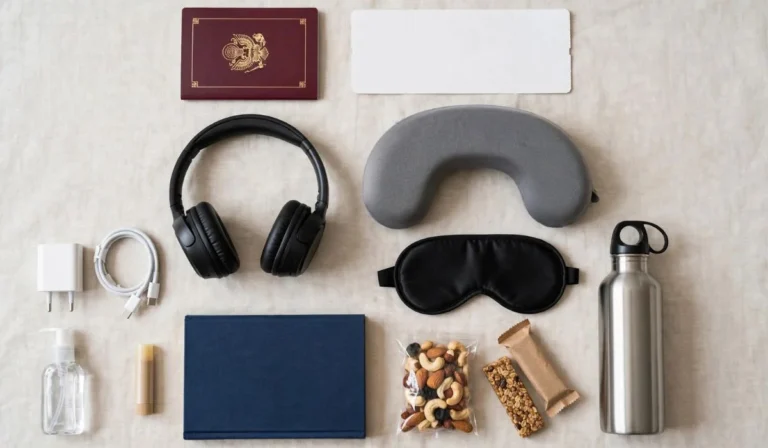
Travel Pillow and Blanket
A compact pillow can provide extra support during passenger breaks, while a lightweight blanket can be useful when the car gets chilly.
Sunglasses
Glare from the road can become uncomfortable during daytime driving. Keep sunglasses within easy reach, especially if you’ll be driving toward sunrise or sunset.
Reusable Tote Bags
A few reusable bags can serve several purposes during a road trip. Use them for groceries, dirty clothes, trash, or items you purchase along the way.
8. Entertainment for Passengers
A long road trip doesn’t have to mean hours of staring out the window.
Downloaded Music and Podcasts
Create playlists before you leave. Download music, podcasts, and audiobooks so you don’t have to depend on mobile data throughout the journey.
Let passengers contribute to the playlist to make the entertainment more enjoyable for everyone.
Books and Travel Games
Passengers can bring books, crossword puzzles, journals, or compact travel games. For families, simple games that don’t require many pieces are easier to manage inside a moving vehicle.
Tablets and Headphones
Tablets can provide movies, shows, games, and other entertainment. Headphones are particularly helpful when passengers have different preferences.
9. Car Cleaning Supplies
Keeping the inside of your vehicle clean becomes much more important when you’re spending several hours or days in it.
Trash Bags
Keep a few small trash bags within easy reach. Designating one location for garbage can prevent wrappers, bottles, and food containers from accumulating throughout the car.
Cleaning Wipes
Disinfecting or cleaning wipes can quickly handle spills and dirty surfaces.
Paper Towels
Paper towels are useful for everything from wiping up drinks to cleaning windows and drying hands after a messy snack.
10. Cash and Payment Methods
Cards and mobile payments are widely accepted, but carrying a backup payment method is still useful.
Credit or Debit Cards
Bring at least one primary payment card and, if possible, a backup option. Keep them stored securely rather than leaving them in an unattended vehicle.
Small Amount of Cash
A little cash can be useful for tolls, parking, small roadside businesses, or locations where card payments aren’t available.
11. Sun Protection
Spending hours in a car means you can still get significant sun exposure, particularly through the windows.
Sunscreen
Apply sunscreen before setting off and reapply as needed, especially if you’ll be spending time outdoors at stops.
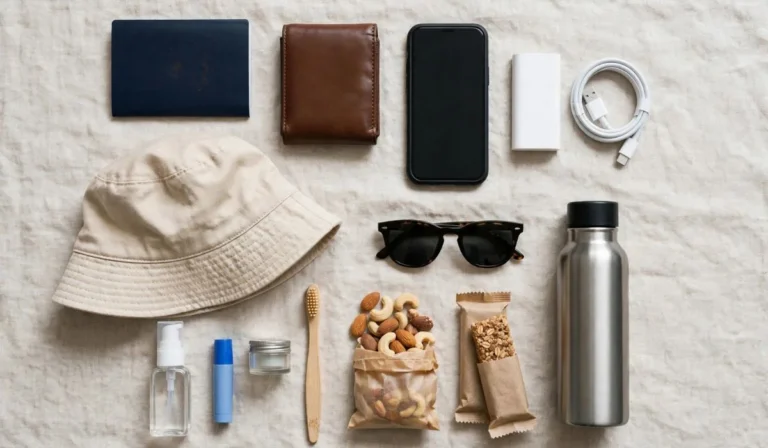
Hat and Sunglasses
A hat provides additional protection when you’re outside, while sunglasses can make daytime driving and sightseeing more comfortable.
12. Items for Children
Traveling with kids requires a few additional considerations.
Snacks and Drinks
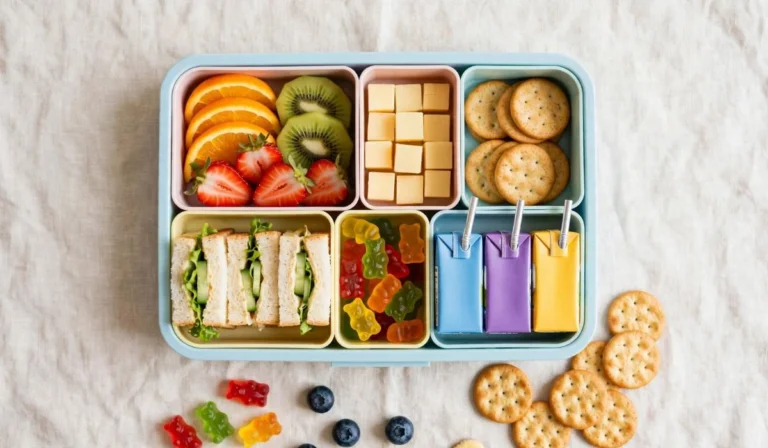
Pack familiar snacks in easy-to-reach containers. Individual portions can help reduce arguments and make serving easier.
Activities and Toys
Bring a selection of books, coloring supplies, games, or other compact activities. Rotate them throughout the journey rather than giving children everything at once.
Extra Clothes and Wipes
Spills and unexpected messes are common when traveling with children. Keep spare clothing, wipes, and plastic or reusable bags within easy reach.
13. Pet Travel Essentials
If your road trip includes a pet, pack everything they may need rather than assuming you’ll find supplies along the route.
Food and Water
Bring enough food for the trip plus some extra. A portable water bowl and supply of fresh water are also useful.
Leash, Carrier, or Restraint
Use an appropriate restraint or carrier to keep your pet secure while the vehicle is moving. Bring a leash for stops and breaks.
Pet Comfort Items
A familiar blanket, toy, or bed can help your pet feel more comfortable in an unfamiliar environment.
14. Camping and Outdoor Gear
If your road trip includes camping, hiking, beaches, or other outdoor activities, you’ll need additional equipment.
Outdoor Essentials
Depending on your plans, consider packing:
- Tent
- Sleeping bag
- Camping stove
- Flashlight or headlamp
- Folding chairs
- Picnic blanket
- Hiking shoes
- Backpack
- Portable cooler
Don’t pack outdoor equipment simply because you might use it. Match your gear to your actual itinerary to save valuable vehicle space.
15. A Simple Road Trip Packing Checklist
Before you leave, use this quick list to make sure you’ve covered the essentials:
- Driver’s license and identification
- Vehicle registration and insurance information
- Navigation device or smartphone
- Car charger and charging cables
- Power bank
- First-aid kit
- Flashlight
- Jumper cables
- Tire equipment
- Water bottles
- Snacks
- Cooler
- Comfortable clothing
- Extra outfit
- Weather-appropriate clothing
- Toiletries
- Sunscreen
- Sunglasses
- Travel pillow and blanket
- Entertainment
- Trash bags
- Cleaning wipes
- Payment cards
- Emergency supplies
- Pet or child essentials, if needed
How to Pack Your Car for a Road Trip
Packing a car isn’t just about fitting everything inside. You also want to keep important items accessible.
Keep Emergency Items Within Reach
Don’t bury the first-aid kit, flashlight, water, or emergency supplies under several suitcases. You should be able to access them without unpacking the entire vehicle.
Create a Dedicated Snack Area
Put snacks and drinks in a cooler or small container that passengers can reach safely. This prevents people from searching through luggage while the car is moving.
Use Soft Bags When Possible
Soft-sided luggage and packing cubes can be easier to fit into irregular spaces than rigid suitcases. They also make it simpler to maximize available trunk space.
How to Avoid Overpacking for a Road Trip
It’s tempting to prepare for every possible situation, but too much gear can make your car crowded and uncomfortable.
Pack According to Your Itinerary
Look at where you’re going, how long you’ll stay, and what activities you’ll actually do. A beach vacation requires different equipment from a mountain getaway or city-to-city drive.
Check Your Car Before Leaving
Give your vehicle a quick inspection before departure. Check tire condition, fluid levels, lights, windshield wipers, and fuel or charging needs.
If something seems unusual, address it before you start the journey rather than waiting for a problem on the road.
Final Thoughts
The best road trip packing list combines practical essentials with a few things that make the journey more comfortable. Start with documents, vehicle supplies, emergency equipment, food, water, and navigation tools. Then add clothing, toiletries, entertainment, and destination-specific gear.
The goal isn’t to bring everything you own. It’s to make sure you have what you need for the drive, your planned activities, and a few unexpected situations along the way.
A little preparation before leaving can turn a stressful drive into a smoother and more enjoyable road trip.
FAQs
What are the most important things to bring on a road trip?
The most important items include identification, vehicle documents, a phone and charger, water, snacks, a first-aid kit, emergency supplies, navigation tools, comfortable clothing, and any medications or personal essentials you need.
How much food should I bring on a road trip?
Bring enough snacks and drinks to cover long stretches between stops, but you don’t necessarily need to pack every meal. A combination of shelf-stable snacks, fresh food, and water usually works well for most trips.
Should I bring an emergency kit on a road trip?
Yes. A basic emergency kit is useful even for relatively short journeys. Consider including a flashlight, first-aid supplies, jumper cables, tire equipment, warning gear, and other vehicle-specific emergency items.
What should I keep in the car for a long road trip?
Keep frequently needed items accessible, including water, snacks, chargers, navigation tools, medications, sunglasses, tissues, and a first-aid kit. Emergency equipment should also be easy to reach.
What should I pack for a road trip with kids?
Bring snacks, drinks, entertainment, headphones, extra clothes, wipes, and any medications or comfort items your children need. Keeping these items within easy reach can make the trip considerably easier.
What should I bring on a road trip with a dog?
Pack your dog’s food, water, bowls, leash, appropriate vehicle restraint or carrier, waste bags, medications if needed, and a familiar blanket or toy. Take regular breaks so your pet can safely stretch and drink.
How can I keep my car organized during a road trip?
Use packing cubes, small storage bins, reusable bags, and a dedicated cooler. Keep important documents and emergency supplies accessible, and establish a specific place for trash throughout the trip.
What should I check before starting a road trip?
Check your tires, spare tire, fluids, lights, windshield wipers, brakes, fuel or charging level, and roadside assistance information. Also review the weather and planned route before leaving.