Travel To Warsaw Poland | Travel Tips and Things to Know
Travel to Warsaw Poland offers a fascinating journey through history, resilience, modern culture, traditional food, and vibrant city life. Poland’s capital is often surprising to first-time visitors because it combines a beautifully reconstructed Old Town with modern skyscrapers, royal residences, green parks, museums, and energetic neighborhoods.
Warsaw is not a city that can be understood from one landmark alone. Its story is reflected in its streets. Historic buildings stand beside modern developments, while museums and monuments help visitors understand the dramatic events that shaped the city. At the same time, Warsaw is a lively European capital filled with cafés, restaurants, shopping areas, art spaces, and nightlife.
This complete guide to travel to Warsaw Poland covers when to visit, how to get around, the best places to see, traditional Polish food, where to stay, budget advice, local travel tips, and useful information for first-time visitors.
What Makes Warsaw a Unique Travel Destination?
Warsaw has a character that feels different from many traditional European capitals. Rather than being defined only by centuries-old buildings, the city tells a powerful story of destruction, reconstruction, and renewal.
The historic center was extensively rebuilt after World War II, and its reconstruction became an internationally recognized example of heritage restoration. Today, Warsaw’s Old Town attracts visitors with colorful buildings, narrow streets, churches, public squares, and historic landmarks.
At the same time, modern Warsaw continues to develop as a major business and cultural center in Central Europe.
Reasons to Include Warsaw in Your Poland Itinerary
Travelers can enjoy a wide range of experiences, including:
- Exploring the historic Old Town
- Visiting royal palaces
- Learning about Polish history
- Discovering modern architecture
- Walking through large parks
- Trying traditional Polish food
- Visiting museums and galleries
- Exploring local neighborhoods
- Enjoying cafés and nightlife
Warsaw is particularly rewarding for travelers who enjoy destinations where history and modern life exist side by side.
Best Time to Travel to Warsaw Poland:
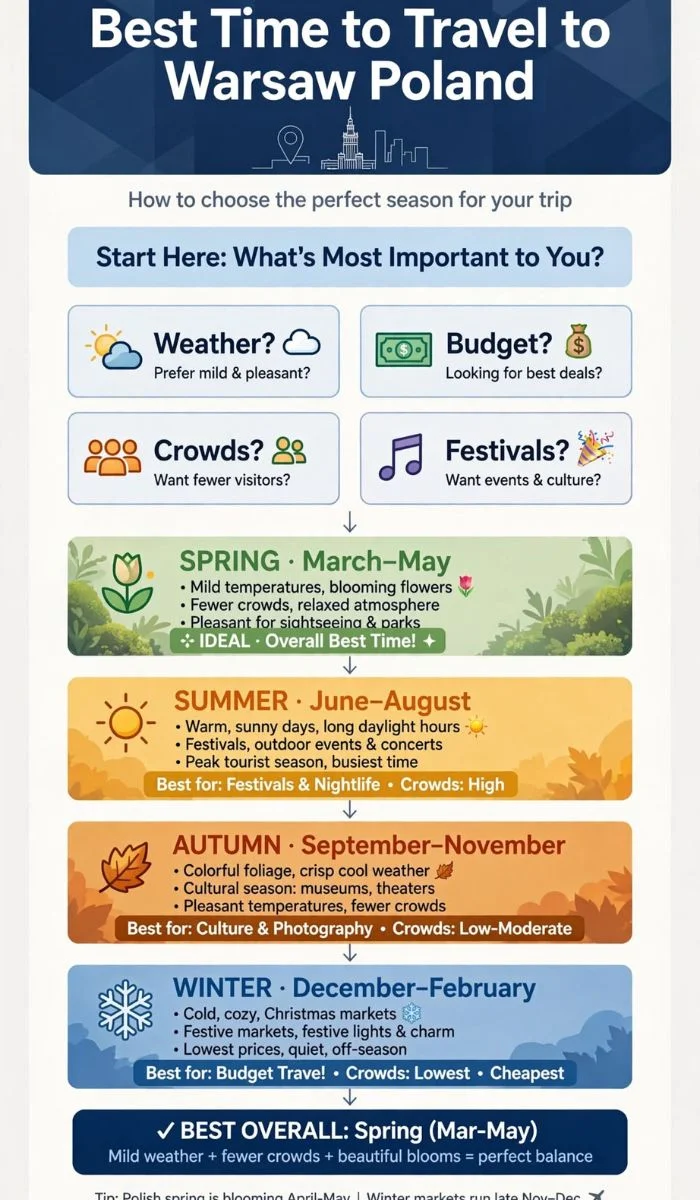
Warsaw has four distinct seasons, and the best time to visit depends on the type of experience you want.
Spring: March to May
Spring gradually brings warmer weather and greener parks to Warsaw. It is a pleasant season for travelers who enjoy outdoor sightseeing without the highest summer temperatures.
As temperatures rise, walking through parks and historic districts becomes more enjoyable.
Spring is ideal for:
- Walking around the Old Town
- Exploring parks
- Outdoor cafés
- Photography
- Sightseeing with fewer crowds than peak summer
Summer: June to August
Summer is one of the busiest periods for travel to Warsaw Poland. Days are longer, and outdoor spaces become lively.
It is a good season for walking tours, parks, festivals, and evening activities.
However, popular attractions may be busier, especially during weekends and holiday periods.
Autumn: September to November
Autumn is an excellent choice for travelers who enjoy cooler weather and colorful parks.
September and early October can be particularly pleasant for exploring Warsaw on foot.
Later in autumn, temperatures become cooler, and travelers should pack warmer clothing.
Winter: December to February
Winter creates a completely different atmosphere in Warsaw.
Temperatures can become cold, and snow is possible. However, winter travelers may enjoy festive markets, seasonal events, museums, cafés, and traditional restaurants.
Warm clothing and appropriate footwear are essential.
How to Get to Warsaw?
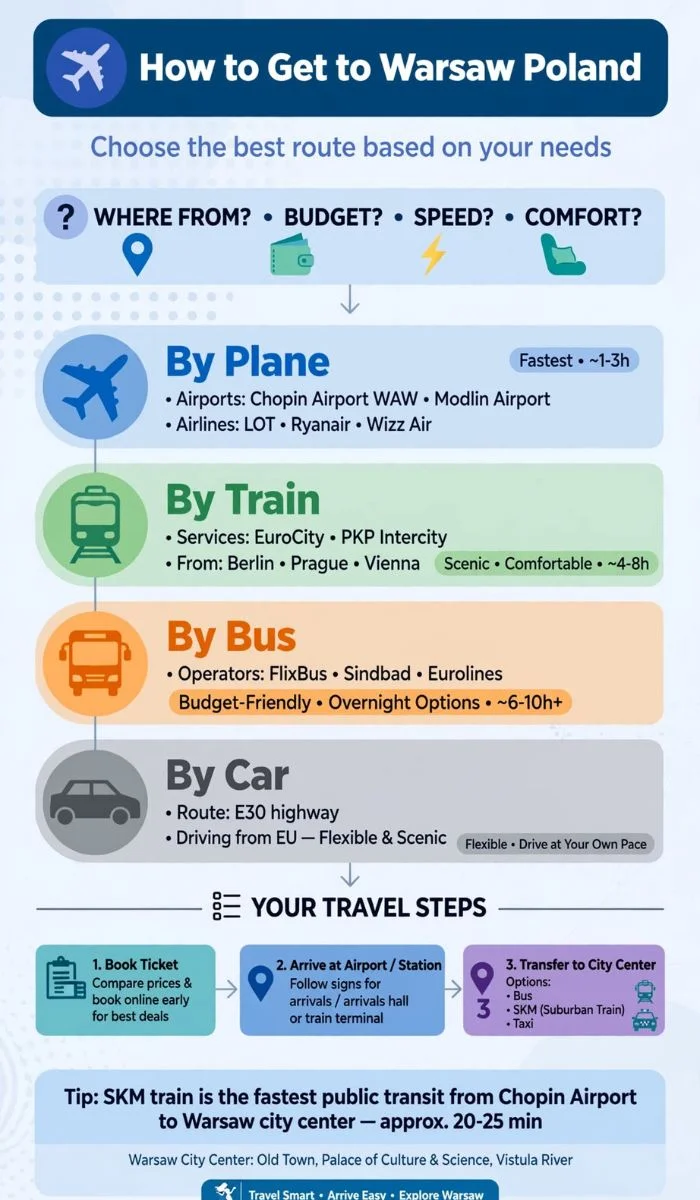
Warsaw is well connected to European and international destinations through air and rail transportation.
Most international visitors arrive at Warsaw Chopin Airport, while the city also has strong train connections with other parts of Poland and selected European destinations.
Arriving by Air
Airport transportation options can include buses, trains, taxis, and private transfers.
Before your trip, check which airport you are arriving at and how far your accommodation is from the city center.
Saving your hotel address and transportation information on your phone can make arrival easier.
Traveling to Warsaw by Train
Train travel is a convenient option for visitors exploring several Polish cities.
Warsaw has important railway connections, making it possible to continue to destinations such as Kraków, Gdańsk, Wrocław, and other parts of the country.
Getting Around Warsaw
Warsaw is larger than its historic center, so visitors may combine walking with public transportation.
The city has buses, trams, and Metro services that connect many important neighborhoods.
Start with the Historic Center on Foot
The Old Town and surrounding central areas are best explored by walking.
This allows you to discover public squares, historic streets, monuments, restaurants, and architectural details.
Comfortable walking shoes are recommended because a typical sightseeing day can involve several hours on foot.
Use Public Transportation for Longer Distances
The Metro, trams, and buses can be useful when visiting attractions outside the central historic areas.
Before traveling, check ticket options and local transportation rules.
Keeping a digital map available can make navigating unfamiliar stations easier.
Explore Warsaw Old Town
Warsaw’s Old Town is one of the city’s most important attractions.
Colorful buildings, narrow streets, historic churches, restaurants, and public spaces create a traditional European atmosphere.
A Remarkable Story of Reconstruction
One of the most important facts about Warsaw’s Old Town is its history of reconstruction after the devastation of World War II.
The rebuilding process carefully restored much of the historic appearance of the district, creating the Old Town visitors see today.
Spend time walking beyond the busiest streets to discover quieter corners and less crowded viewpoints.
Visit Castle Square
Castle Square is a major meeting point and one of the most recognizable areas in Warsaw.
It connects visitors with important historic landmarks and provides a convenient starting point for exploring the Old Town.
Best Time to Visit
Early morning can provide a quieter experience, while the afternoon and evening bring a more energetic atmosphere.
The area is also an excellent place to begin a walking route through the historic center.
Discover the Royal Castle:
The Royal Castle is one of Warsaw’s most important historic landmarks.
The building represents Poland’s royal and political history and is located close to Castle Square.
Plan Enough Time for Your Visit
Visitors interested in history and architecture should allow enough time to explore the exhibitions rather than treating the castle as a quick sightseeing stop.
Combining the castle with a walk through the Old Town can create a complete half-day itinerary.
Walk Along the Royal Route
The Royal Route connects several important historic and cultural areas.
Exploring this route provides an opportunity to see churches, palaces, public buildings, monuments, cafés, and shopping streets.
Explore at a Relaxed Pace
Rather than trying to visit every landmark, choose several places that interest you and leave time to enjoy the streets themselves.
Warsaw is a city where walking between attractions can become part of the experience.
Visit Łazienki Park
Łazienki Park is one of Warsaw’s most beautiful green spaces.
The large park offers walking paths, gardens, historic buildings, and peaceful areas away from the busy city center.
A Perfect Place to Slow Down
After spending hours in museums and historic streets, Łazienki Park provides a quieter side of Warsaw.
It is ideal for:
- Walking
- Relaxing
- Photography
- Exploring gardens
- Enjoying historic architecture
Allow several hours if you want to explore the park without rushing.
Learn About Warsaw’s History Through Museums
Warsaw’s museums offer important insight into Poland’s history, culture, and difficult twentieth-century experiences.
For travelers who want to understand the city beyond its architecture, visiting at least one historical museum is highly recommended.
Choose Museums Based on Your Interests
Possible themes include:
- Polish history
- Warsaw during World War II
- Art and culture
- Science
- Jewish history
- Modern Polish society
Instead of trying to visit multiple museums in one day, choose one important museum and give yourself enough time to understand the exhibitions.
Explore the Palace of Culture and Science Area
The Palace of Culture and Science is one of Warsaw’s most recognizable buildings.
The surrounding area also represents the modern side of the capital, with shopping centers, offices, hotels, transportation connections, and contemporary architecture.
See Warsaw from Above
Observation areas and high viewpoints can provide a better understanding of Warsaw’s changing skyline.
Try to visit during clear weather for better visibility.
Late afternoon can be especially interesting as the city changes from daylight to evening.
Visit the Warsaw University Area
The streets around Warsaw University provide another interesting perspective on the city.
The area combines academic institutions, historic architecture, cafés, restaurants, and convenient access to central attractions.
A Good Area for Walking
Explore nearby streets without following a strict itinerary.
You may discover bookstores, cafés, historic buildings, and quieter corners away from the busiest tourist locations.
Experience Warsaw’s Modern Neighborhoods
Modern Warsaw has a growing creative and cultural scene.
Former industrial spaces and newer developments have become home to restaurants, galleries, cafés, and entertainment venues.
Explore Beyond the Famous Attractions
First-time visitors often focus entirely on the Old Town, but modern neighborhoods can reveal another side of Warsaw.
Spend at least one afternoon exploring an area chosen for your personal interests, whether that means food, art, shopping, or nightlife.
Try Traditional Polish Food
Food is an important part of travel to Warsaw Poland.
Polish cuisine includes comforting dishes that are particularly enjoyable during cooler weather.
Popular foods to try include:
- Pierogi
- Bigos
- Żurek
- Gołąbki
- Potato-based dishes
- Traditional soups
- Polish pastries
Where to Find Local Food
Look beyond restaurants located directly beside the most popular tourist attractions.
Exploring local neighborhoods can lead to smaller restaurants with traditional menus and a more relaxed atmosphere.
Always check prices before ordering in busy tourist districts.
Read Next: Travel To Dublin | Best Attractions
Enjoy Warsaw’s Café Culture
Warsaw has a lively café scene, ranging from historic-style cafés to modern specialty coffee shops.
Stopping for coffee can be a useful way to take a break between major attractions.
Make Time for Slow Travel
A short café break can turn a busy sightseeing day into a more relaxed travel experience.
Instead of rushing from one attraction to another, allow time to observe everyday city life.
Where to Stay in Warsaw
The best place to stay depends on your budget and the type of trip you want.
Warsaw offers a wide variety of accommodation, from luxury hotels to apartments, hostels, and boutique properties.
Old Town and City Centre
Best for first-time visitors who want convenient access to major attractions.
These areas are suitable for travelers planning to walk frequently.
Near Major Transportation Connections
Staying near a Metro or tram connection can be useful if you plan to explore several different neighborhoods.
Quieter Residential Areas
Travelers staying longer may prefer quieter neighborhoods with local restaurants and parks.
Make sure transportation access is convenient before booking.
How Many Days Do You Need in Warsaw?
Three days is a good amount of time for first-time visitors, while four or five days allows a slower experience and possible day trips.
A Three-Day Warsaw Itinerary
Day 1:
- Explore Castle Square
- Visit Warsaw Old Town
- Walk through historic streets
- Enjoy traditional Polish food
Day 2: - Visit a major museum
- Explore the Royal Route
- Visit the Palace of Culture and Science area
- Enjoy Warsaw in the evening
Day 3: - Spend time in Łazienki Park
- Explore a modern neighborhood
- Visit cafés and local restaurants
- Walk through the city at sunset
Day Trips from Warsaw
Warsaw can also be used as a starting point for exploring nearby destinations.
Historic towns, countryside areas, forests, and smaller cities can provide a different perspective on Poland.
Plan Transportation Before Leaving
Check train or bus schedules in advance, particularly when returning in the evening.
Choose a destination that allows enough time to explore without spending most of the day traveling.
Budget Tips for Travel to Warsaw Poland
Warsaw can be more affordable than some major Western European capitals, but travel costs depend on accommodation, dining, activities, and season.
Simple Ways to Reduce Travel Costs
- Use public transportation
- Book accommodation early
- Walk between nearby attractions
- Eat at local restaurants
- Visit parks and public squares
- Choose free or low-cost activities
- Travel outside peak holiday periods when possible
Planning your daily expenses before arriving can help you enjoy Warsaw without unnecessary spending.
Practical Travel Tips for First-Time Visitors
A little preparation can make your Warsaw trip smoother.
Pack for the Season
Warsaw experiences significant seasonal changes.
Summer clothing may be completely unsuitable for winter travel, so check expected conditions before packing.
Learn a Few Polish Words
English may be widely used in many tourist and central areas, but learning simple Polish greetings can be helpful and appreciated.
Keep a Map Available
Download an offline map or prepare a navigation application before exploring.
This can be useful when traveling underground or in areas with limited connectivity.
Shopping in Warsaw
Warsaw offers modern shopping centers, local markets, international brands, and traditional souvenir stores.
Look for Local Products
Travelers may find locally inspired crafts, food products, artwork, and souvenirs that offer a more meaningful reminder of their trip.
Compare prices before making expensive purchases.
Safety Tips for Warsaw Travelers
Warsaw is a major European capital, and visitors should follow standard travel safety practices.
Stay Aware in Crowded Areas
Keep bags and valuables secure in transportation hubs, busy streets, and crowded attractions.
Know Your Transportation Route
Before going out at night, know how you plan to return to your accommodation.
Saving your hotel location on your phone can make navigation easier.
Experience Warsaw Beyond the Checklist
The best Warsaw trip is not only about collecting photographs of famous landmarks.
The city becomes more interesting when you allow time to understand its history and experience its everyday life.
Walk through a quiet street, spend an afternoon in a park, try a traditional meal, or explore a neighborhood without a strict destination.
This combination of history and spontaneity can create a much more memorable travel experience.
Travel to Warsaw Poland: Final Thoughts
Travel to Warsaw Poland offers history, culture, architecture, green spaces, traditional food, and modern city experiences in one fascinating destination. The city has rebuilt and transformed itself while preserving important connections to its past.
For first-time visitors, a balanced itinerary works best. Explore the Old Town and major landmarks, but also spend time in parks, museums, cafés, and modern neighborhoods.
Warsaw may not always receive the same attention as Europe’s most famous capitals, but that is part of its appeal. It offers a meaningful and varied city break for travelers who want to discover Poland beyond the obvious tourist routes.
FAQs About Travel to Warsaw Poland
Is Warsaw Poland worth visiting?
Yes. Warsaw is worth visiting for travelers interested in history, architecture, museums, traditional Polish food, parks, and modern European city life.
How many days should I spend in Warsaw?
Three days is enough for many major attractions, while four or five days allows a slower experience and possible day trips.
What is the best time to visit Warsaw?
Late spring, summer, and early autumn are popular for sightseeing. However, winter can also be attractive for travelers who enjoy festive events and museums.
Is Warsaw expensive for tourists?
Warsaw can be more affordable than many major Western European capitals, although prices vary depending on accommodation, restaurants, and travel season.
Can you walk around Warsaw?
Yes. Warsaw’s Old Town and central historic areas are walkable, although public transportation is useful for reaching more distant attractions.
What is Warsaw most famous for?
Warsaw is known for its reconstructed Old Town, royal history, museums, resilient twentieth-century history, parks, Polish cuisine, and modern city development.
What food should I try in Warsaw?
Popular traditional foods include pierogi, bigos, żurek, gołąbki, Polish soups, potato dishes, and local pastries.
Do people speak English in Warsaw?
English is commonly spoken in many hotels, restaurants, tourist attractions, and central areas, although learning a few Polish phrases can be helpful.
What should I pack for Warsaw?
Pack comfortable walking shoes and weather-appropriate clothing. A waterproof jacket may also be useful depending on the season.
Is Warsaw good for first-time visitors to Poland?
Yes. Warsaw is an excellent introduction to Poland because it combines important history, modern culture, convenient transportation, and easy connections to other Polish destinations.