
Travel To Dublin | Best Attractions, Travel Tips and Things to Know
Travel to Dublin offers a lively mix of literary history, traditional Irish culture, historic landmarks, friendly pubs, beautiful parks, and modern city life. Ireland’s capital may be smaller than many major European cities, but it has an energetic personality that makes it easy to explore and difficult to forget.
For first-time visitors, Dublin is a destination where historic castles, famous libraries, Georgian streets, museums, live music venues, and traditional pubs can all be experienced within a relatively compact area. One day you may be exploring centuries-old history, while the next evening you could be listening to traditional Irish music in a busy local pub.
This complete travel to Dublin guide covers the best time to visit, how to get around, major attractions, Irish food, accommodation areas, travel costs, practical tips, and ideas for making the most of your trip.
Why Travel to Dublin?

Dublin is one of Europe’s most character-filled capital cities. It is internationally known for its literary heritage, historic institutions, traditional Irish hospitality, and lively social culture.
The city is also an excellent destination for travelers who enjoy walking. Many of the main attractions are located within or close to the central area.
Some of the biggest reasons to visit Dublin include:
- Historic castles and landmarks
- Irish literature and cultural history
- Traditional pubs and live music
- Famous museums and libraries
- Walkable city neighborhoods
- Georgian architecture
- Beautiful parks and green spaces
- Easy day trips to coastal and countryside destinations
A Capital with a Strong Cultural Identity
Dublin has played an important role in Irish literature and history. The city is associated with famous writers including James Joyce, Oscar Wilde, W.B. Yeats, and Samuel Beckett.
One interesting fact about Dublin is that literature is deeply connected to the city’s identity. Visitors can explore historic libraries, literary landmarks, theaters, bookshops, and neighborhoods connected with Ireland’s famous writers.
Best Time to Travel to Dublin:

Dublin can be visited throughout the year, but weather and crowd levels can affect your experience.
The city has a maritime climate, meaning that conditions can change quickly. Rain is possible during any season, so packing a waterproof layer is always a good idea.
Spring: March to May
Spring is a pleasant time for travel to Dublin. Parks and gardens begin to become greener, while temperatures gradually become more comfortable for walking.
Spring is ideal for:
- City sightseeing
- Walking tours
- Visiting parks
- Exploring historic neighborhoods
- Day trips outside Dublin
Crowds may be lighter than during the busiest summer months.
Summer: June to August
Summer is one of the most popular times to visit Dublin.
Longer daylight hours provide more time for sightseeing, and outdoor events can create a lively atmosphere throughout the city.
However, accommodation prices may increase, and major attractions can become busy.
Autumn: September to November
Autumn can be an excellent time for travelers who prefer a slightly quieter city experience.
The streets and parks can be especially attractive during early autumn, while cooler weather makes cafés, museums, and traditional pubs even more inviting.
Winter: December to February
Winter is generally cooler and can bring shorter daylight hours, but Dublin remains an enjoyable city destination.
Travelers who enjoy museums, restaurants, cultural attractions, and festive events may find winter a good time to visit.
How to Get to Dublin?
Most international visitors arrive through Dublin Airport, one of Ireland’s main transportation hubs.
The airport is located outside the central city area and has connections to Dublin through buses, taxis, and other transportation options.
Airport Travel Tips
Before arriving, check:
- The location of your accommodation
- Airport transportation schedules
- Estimated transfer times
- Luggage restrictions
- Late-night transportation options
Choosing airport transportation in advance can make arrival easier, particularly after a long international flight.
How to Get Around Dublin?
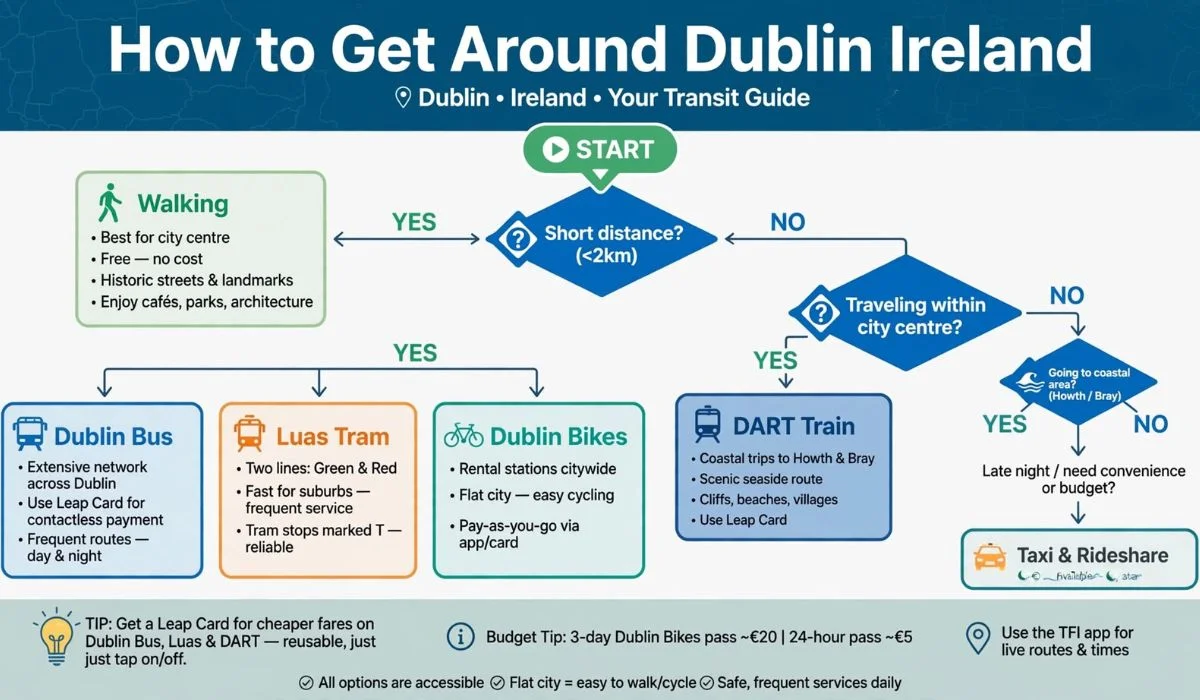
Dublin is a very walkable destination, particularly for travelers staying near the city center.
Many famous attractions can be reached on foot, allowing visitors to discover interesting streets and neighborhoods along the way.
Walk Whenever Possible
Walking is often the most enjoyable way to experience Dublin.
The city center includes historic streets, public squares, river views, cafés, bookstores, and cultural landmarks that can easily be missed when traveling only by vehicle.
Comfortable shoes and a waterproof jacket are useful travel essentials.
Public Transportation
Public transportation can be useful when traveling outside the central area.
Buses, trams, and trains connect different parts of Dublin and nearby destinations.
Before traveling, check the most suitable payment options and routes for your planned itinerary.
Visit Trinity College and Its Historic Library
Trinity College is one of Dublin’s most famous landmarks and an important part of the city’s academic and cultural history.
Visitors are drawn to its historic buildings and internationally recognized library.
Why This Area Is Worth Visiting
The college is located close to many central attractions, making it easy to include in a first-time Dublin itinerary.
Allow time to explore the surrounding streets after your visit, as the nearby area contains cafés, shops, museums, and historic buildings.
Explore Dublin Castle
Dublin Castle is an important historic landmark located in the heart of the city.
The site has played different roles throughout Irish history and provides visitors with an opportunity to explore another side of Dublin’s past.
Plan Your Visit
The castle can be easily combined with nearby attractions.
A good itinerary idea is to explore this area together with historic churches, museums, and streets in central Dublin.
Walk Along the River Liffey
The River Liffey runs through the center of Dublin and helps divide the city’s north and south sides.
Walking beside the river provides a simple way to experience the city’s atmosphere.
Best Time for a River Walk
Morning is quieter and suitable for photography, while late afternoon and evening offer a more energetic atmosphere.
Crossing several bridges can also provide different perspectives of the city.
Experience the Temple Bar Area
Temple Bar is one of Dublin’s most internationally recognized neighborhoods.
The area is famous for its pubs, restaurants, cobbled streets, and nightlife.
It can be lively throughout the day and particularly busy during the evening.
What to Know Before Visiting
Temple Bar is popular with tourists, so prices may be higher than in some other neighborhoods.
It is worth visiting for the atmosphere, but travelers looking for a quieter or more local pub experience may also want to explore other parts of the city.
Discover Dublin’s Traditional Pub Culture
Visiting a traditional pub is an important part of travel to Dublin for many visitors.
Pubs can be social spaces where people meet for conversation, food, music, and drinks.
How to Find a Good Pub Experience
Do not limit yourself to the most famous tourist locations.
Explore neighborhoods beyond the busiest streets and look for pubs that host live traditional music or have a relaxed local atmosphere.
Remember that each pub has its own personality, from quiet historic interiors to energetic music venues.
Visit the Guinness Storehouse
The Guinness Storehouse is one of Dublin’s best-known visitor attractions.
The experience explores the history, production, advertising, and cultural significance of one of Ireland’s most internationally recognized drinks.
Is It Worth Visiting?
It can be especially interesting for visitors who enjoy food and drink experiences, industrial history, advertising, or panoramic city views.
Because it is a popular attraction, booking ahead may help you secure your preferred visiting time.
Explore St. Stephen’s Green
St. Stephen’s Green is a beautiful public park located close to central Dublin.
The green space offers walking paths, trees, gardens, and places to relax after a busy sightseeing day.
A Perfect Break from City Sightseeing
After visiting museums and historic attractions, spend time sitting in the park or walking through the pathways.
This is a simple and budget-friendly way to experience a quieter side of Dublin.
Visit the National Museums and Galleries
Dublin has several museums and cultural institutions that allow travelers to learn more about Ireland’s history, archaeology, art, and society.
Museums can also be a useful option during rainy weather.
Create a Flexible Museum Day
Instead of trying to visit every museum, choose one or two subjects that genuinely interest you.
This will give you more time to explore without feeling rushed.
Explore Georgian Dublin
Dublin is known for its elegant Georgian architecture.
Walking through residential streets with colorful doors and historic buildings offers a different perspective from the city’s busy tourist areas.
Best Way to Experience the Architecture
Choose a neighborhood and walk slowly.
Look beyond famous landmarks and notice details such as:
- Decorative doorways
- Historic townhouses
- Public squares
- Tree-lined streets
- Traditional brick buildings
This style of sightseeing is especially enjoyable for photographers and architecture lovers.
Try Traditional Irish Food
Travel to Dublin is not complete without exploring Irish food.
Modern Dublin offers an international dining scene, but visitors should also try traditional Irish dishes.
Popular options include:
- Irish stew
- Soda bread
- Seafood dishes
- Shepherd’s pie
- Boxty
- Traditional breakfasts
Look Beyond Tourist Restaurants
Restaurants around major tourist attractions can be convenient, but exploring nearby neighborhoods may lead to more diverse dining options.
Ask hotel staff or local residents for restaurant suggestions based on your budget and preferred food style.
Where to Stay in Dublin
Your choice of accommodation can affect how easily you explore the city.
Dublin has hotels, guesthouses, hostels, apartments, and boutique properties for different budgets.
City Centre
Best for first-time visitors who want to walk to major attractions.
This location offers convenience but may also be more expensive and busier.
Temple Bar and Nearby Areas
Suitable for travelers who want nightlife and a lively atmosphere.
However, noise can be a consideration when choosing accommodation.
Georgian Neighborhoods
These areas can provide a quieter experience while still offering reasonable access to central attractions.
How Many Days Should You Spend in Dublin?
Three days is a comfortable amount of time for many first-time visitors.
A longer trip allows more opportunities for day trips and slower neighborhood exploration.
A Three-Day Dublin Travel Itinerary
Day 1:
- Explore Trinity College
- Walk through the city center
- Visit St. Stephen’s Green
- Explore nearby Georgian streets
Day 2: - Visit Dublin Castle
- Explore museums
- Walk along the River Liffey
- Experience a traditional pub in the evening
Day 3: - Visit the Guinness Storehouse
- Explore local neighborhoods
- Visit a park or gallery
- Enjoy traditional Irish food and live music
Best Day Trips from Dublin
One of the advantages of staying in Dublin is access to beautiful destinations beyond the city.
Coastal towns, historic sites, mountains, and countryside landscapes can provide a completely different travel experience.
Explore the Irish Coast
Coastal destinations near Dublin can offer scenic walking routes, sea views, and colorful local communities.
A coastal day trip is a great choice after several days of urban sightseeing.
Visit Historic Countryside Destinations
Ireland’s countryside contains castles, historic villages, green landscapes, and walking opportunities.
Plan transportation carefully and allow enough time for the return journey.
Budget Tips for Travel to Dublin
Dublin can be expensive, particularly during busy tourism periods. However, visitors can control costs with careful planning.
Ways to Save Money
- Book accommodation early
- Walk between nearby attractions
- Use public transportation when necessary
- Visit free parks and public spaces
- Choose restaurants outside major tourist areas
- Plan paid attractions carefully
Creating a realistic daily budget before your trip can prevent unnecessary spending.
Important Weather Tips
Dublin weather can change quickly.
A sunny morning can become rainy later in the day, so flexible clothing is useful.
What to Pack
Consider bringing:
- A waterproof jacket
- Comfortable walking shoes
- Layers for changing temperatures
- A compact umbrella if preferred
- A reusable water bottle
Packing for changing weather can make your Dublin trip significantly more comfortable.
Safety Tips for First-Time Visitors
Dublin is a major international destination, but travelers should still follow standard safety practices.
Stay Aware in Busy Areas
Keep personal belongings secure in crowded streets, transportation areas, and nightlife districts.
Plan Your Route at Night
Know how you will return to your accommodation, particularly if staying outside the busiest central neighborhoods.
A Better Way to Experience Dublin
The most memorable Dublin experiences are not always found on a strict sightseeing schedule.
Visit the major landmarks, but also leave time to walk without a destination.
Step into a bookstore, relax in a park, listen to local music, or spend an afternoon exploring a neighborhood.
Dublin has a social and cultural atmosphere that is best experienced slowly.
Read Next: Travel To Florence Italy | Complete Guide
Travel to Dublin: Final Thoughts
Travel to Dublin offers history, culture, literature, food, architecture, and an energetic social atmosphere in one compact European capital. The city is easy to explore on foot and provides enough famous attractions to fill several days without feeling overwhelming.
For the best experience, combine popular landmarks with local neighborhoods. Visit the historic sites, explore the museums, enjoy Irish food, and spend time discovering Dublin’s famous pub culture beyond the most crowded tourist streets.
Whether you are visiting for a weekend or using the city as a starting point for exploring Ireland, Dublin can provide a memorable and welcoming travel experience.
FAQs About Travel to Dublin
Is Dublin worth visiting?
Yes. Dublin is worth visiting for travelers interested in Irish history, literature, culture, museums, historic landmarks, food, music, and nightlife.
How many days are enough for Dublin?
Three days is a good amount of time for first-time visitors, while four or five days allows additional time for day trips.
What is the best time to travel to Dublin?
Late spring through early autumn is popular for comfortable sightseeing, but Dublin can be visited throughout the year.
Is Dublin an expensive city for tourists?
Dublin can be expensive, especially for accommodation and central tourist areas. Planning ahead can help travelers manage their budget.
Can you walk around Dublin easily?
Yes. Many of Dublin’s major attractions are located close to one another, making walking one of the best ways to explore the city.
What is Dublin most famous for?
Dublin is famous for its literary history, traditional Irish pubs, Guinness, historic landmarks, Georgian architecture, museums, and lively cultural atmosphere.
What food should I try in Dublin?
Try Irish stew, soda bread, seafood, boxty, traditional breakfasts, and modern Irish cuisine.
Should I visit Temple Bar?
Temple Bar is worth visiting for its famous atmosphere, historic streets, and nightlife. However, exploring other neighborhoods can provide a broader view of Dublin’s pub culture.
What should I pack for Dublin?
Pack comfortable walking shoes, layers, a waterproof jacket, and clothing suitable for changing weather.
Is Dublin good for first-time travelers to Ireland?
Yes. Dublin is an excellent starting point for first-time visitors because it offers major cultural attractions and convenient connections to other parts of Ireland.