Travel To Fukuoka | Unforgettable Japan Adventure
Travel to Fukuoka is an exciting choice for travelers who want to experience a different side of Japan. Located on Kyushu, Fukuoka combines modern city life, historic temples, lively food stalls, beautiful coastlines, peaceful parks, shopping districts, and easy access to some of the region’s most memorable destinations.
While Tokyo can feel enormous and Kyoto is famous for its historic temples, Fukuoka offers a more relaxed travel rhythm. You can arrive at the airport, reach the city quickly, spend the afternoon exploring traditional Hakata streets, and finish the evening eating ramen at an open-air food stall.
This guide to Travel to Fukuoka covers essential planning tips, detailed trip ideas, famous attractions, food experiences, day trips, seasonal travel inspiration, and practical advice for building a memorable itinerary.
Fukuoka is known for its compact layout, food culture, modern shopping areas, historic Hakata neighborhoods, natural attractions, and famous yatai food stalls.
For updated visitor information, local attractions, events, and itineraries, explore the Fukuoka City Official Tourist Guide.
Why Travel to Fukuoka Should Be on Your Japan Bucket List?
Fukuoka is perfect for travelers who want a major Japanese city experience without spending every day surrounded by overwhelming crowds.
A Fukuoka trip can include:
- Famous Hakata ramen and local cuisine.
- Open-air yatai food stalls.
- Historic temples and shrines.
- Modern shopping districts.
- Peaceful parks.
- Beaches and coastal scenery.
- Island adventures.
- Traditional Japanese culture.
- Day trips to Dazaifu and Yanagawa.
- Nightlife and entertainment.
Travel fact: Fukuoka is known as one of Japan’s most compact major cities, with Fukuoka Airport, Hakata Station, and Hakata Port located within roughly 2.5 kilometers of one another.
How Many Days Should You Spend in Fukuoka?
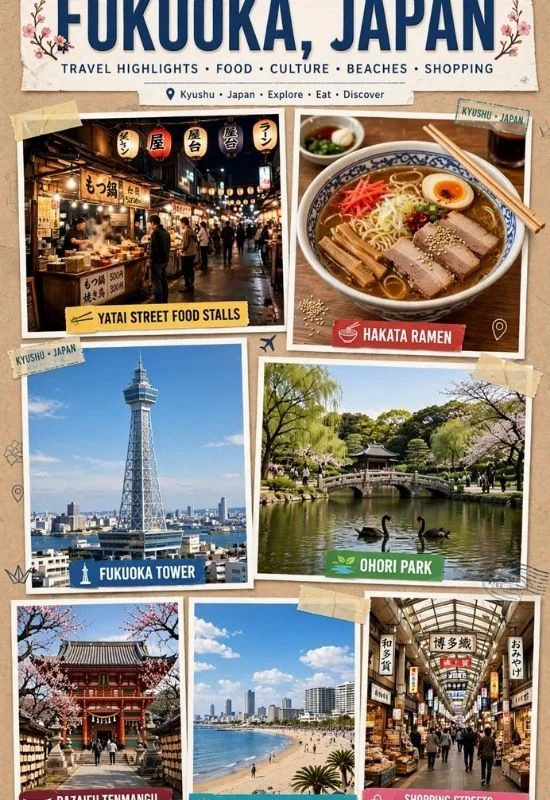
The length of your trip depends on whether you want to explore only the city or include destinations across Fukuoka Prefecture.
A Quick 2-Day Fukuoka Trip
Two days are enough for a first introduction.
Focus on:
- Hakata Station.
- Hakata Old Town.
- Kushida Shrine.
- Canal City.
- Tenjin.
- A yatai food stall experience.
This itinerary is ideal for travelers combining Fukuoka with other destinations in Kyushu.
A Comfortable 3-Day Fukuoka Trip
Three days allow you to combine city sightseeing with one special experience outside the central districts.
Try:
- Day 1: Hakata and traditional culture.
- Day 2: Tenjin, parks, shopping, and food.
- Day 3: Dazaifu, Yanagawa, or a coastal destination.
A Relaxed 5-Day Fukuoka Itinerary
Five days provide more freedom to experience the region.
Add:
- Ohori Park.
- Seaside Momochi.
- Itoshima.
- Dazaifu.
- Yanagawa.
- Shikanoshima.
- Nokonoshima.
The official tourism guide highlights city districts alongside destinations outside Fukuoka City, making the area suitable for both short city breaks and longer regional trips.
Best Time to Travel to Fukuoka:

Fukuoka can be visited throughout the year, but every season creates a different style of trip.
Spring: Flowers and Comfortable Sightseeing
Spring is excellent for:
- Park walks.
- Temple visits.
- Outdoor cafés.
- Day trips.
- Seasonal flowers.
Dazaifu is particularly known for its plum blossoms, with the flowering period attracting visitors around February and early March.
Summer: Festivals and Nightlife
Summer brings a lively atmosphere to Fukuoka.
Travel ideas include:
- Evening yatai dining.
- Coastal trips.
- Festivals.
- Night cruises.
- Shopping.
- Indoor cultural attractions during the hottest hours.
Travel fact: Hakata Gion Yamakasa is one of Fukuoka’s most famous traditional summer festivals and takes place in July.
Autumn: Food and Coastal Adventures
Autumn is ideal for:
- Walking tours.
- Parks.
- Day trips.
- Local food.
- Coastal scenery.
- Outdoor activities.
The cooler weather makes exploring multiple neighborhoods more comfortable.
Winter: Food and City Exploration
Winter is a wonderful season for travelers who enjoy:
- Ramen.
- Hot pot.
- Shopping.
- Cultural attractions.
- Evening food stalls.
Fukuoka’s mild urban winter atmosphere makes it easier to continue sightseeing compared with Japan’s snowiest northern destinations.
Travel To Fukuoka | Unforgettable Japan Adventure:
1. Start Your Travel to Fukuoka in Hakata
Hakata is one of the best places to begin your journey because it combines transportation, food, shopping, and history.
The area is particularly convenient for:
- First-time visitors.
- Short trips.
- Train travelers.
- Food lovers.
- Travelers arriving by air.
Hakata Station is a major transportation hub, while nearby streets provide access to historic shrines, gardens, restaurants, and shopping.
A Smart Hakata Trip Pattern
Start your day around Hakata Station.
Then:
- Walk toward Hakata Old Town.
- Visit a shrine or temple.
- Explore traditional streets.
- Stop for lunch.
- Return to the central city for evening food.
This creates a balanced first day without wasting too much time on transportation.
2. Discover Hakata Old Town
Hakata Old Town offers one of the best opportunities to see Fukuoka’s historic personality.
The area includes:
- Traditional temples.
- Shrines.
- Historic streets.
- Cultural museums.
- Local shopping streets.
- Traditional craft experiences.
Travel fact: Hakata once developed as an important medieval port city, and the Hakata Old Town area still preserves cultural traditions and historic streets connected with that history.
What to Do in Hakata Old Town
Build your trip around slow exploration:
- Visit Kushida Shrine.
- Explore historic temples.
- Walk through traditional streets.
- Visit cultural museums.
- Try a craft experience.
- Continue toward Kawabata Shopping Arcade.
This area is much more enjoyable when you avoid rushing from one attraction to another.
3. Visit Kushida Shrine
Kushida Shrine is one of Fukuoka’s important historic attractions.
It is associated with local traditions and is particularly connected with the Hakata Gion Yamakasa festival.
Reasons to visit:
- Historic architecture.
- Traditional atmosphere.
- Easy access from central Hakata.
- Cultural importance.
- Connection with local festivals.
The shrine is identified by the official Fukuoka Prefecture tourism guide as an important Hakata landmark and guardian deity connected with Hakata Gion Yamakasa.
4. Experience Fukuoka’s Famous Yatai Food Stalls
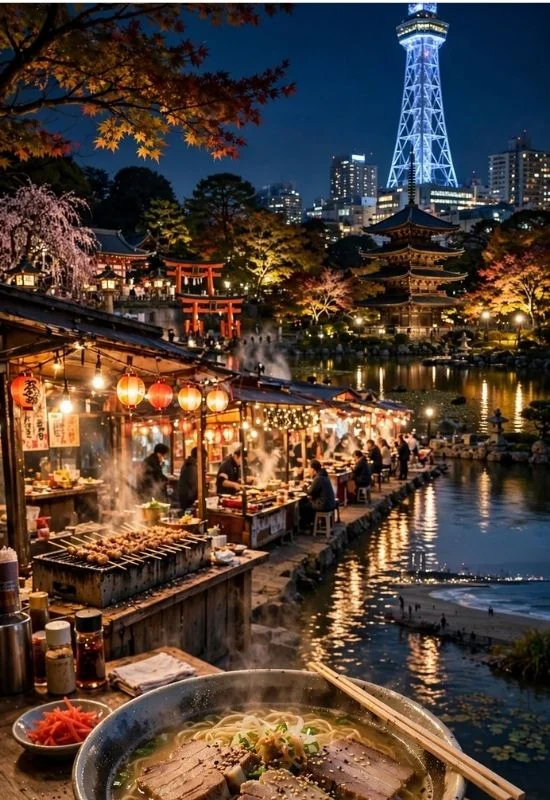
One of the most memorable things to do when you travel to Fukuoka is eating at a yatai.
These small open-air food stalls appear in different parts of the city during the evening.
You can find yatai concentrated around:
- Tenjin.
- Nakasu.
- Nagahama.
Popular dishes can include: - Tonkotsu ramen.
- Oden.
- Gyoza.
- Tempura.
- Yakitori.
- Seasonal dishes.
Travel fact: Fukuoka has more than 100 yatai food stalls, making them one of the city’s most distinctive food and nightlife experiences.
How to Enjoy a Yatai Like a Traveler
A simple approach works best:
- Visit after sunset.
- Choose a stall with an atmosphere you enjoy.
- Order one or two specialties.
- Be open to trying something new.
- Enjoy the social atmosphere.
Yatai are not only about eating. They are also an opportunity to experience Fukuoka’s friendly and informal nightlife culture.
Read next: Travel To Hong Kong | Unforgettable City Escape
5. Create a Food-Focused Fukuoka Trip
Fukuoka is one of Japan’s strongest destinations for travelers who plan vacations around food.
Local specialties include:
- Hakata tonkotsu ramen.
- Motsunabe.
- Mizutaki.
- Gomasaba.
- Yakitori.
- Sushi.
- Udon.
- Gyoza.
The city’s official tourism guide highlights its culinary culture as one of Fukuoka’s defining experiences.
A Perfect Food Day in Fukuoka
Morning:
- Traditional Japanese breakfast.
Lunch: - Ramen or udon.
Afternoon: - Café and dessert.
Evening: - Yatai food stalls.
Late night: - Small local snack or dessert.
This pattern lets you experience different dishes without eating every meal at the same type of restaurant.
6. Explore Tenjin for Shopping and City Life
Tenjin is Fukuoka’s modern commercial heart.
The area is ideal for:
- Shopping.
- Cafés.
- Restaurants.
- Fashion.
- Nightlife.
- Urban walking.
The Tenjin and Yakuin area combines department stores and major shopping centers with smaller neighborhoods containing independent cafés, boutiques, restaurants, shrines, and cultural spaces.
A Different Tenjin Travel Idea
Do not spend your entire visit inside shopping malls.
Explore:
- Kego.
- Daimyo.
- Imaizumi.
Look for: - Independent cafés.
- Small restaurants.
- Fashion stores.
- Creative spaces.
- Local streets.
This gives your trip a more personal and contemporary Fukuoka atmosphere.
7. Relax at Ohori Park
Ohori Park provides a peaceful escape from the busy streets of central Fukuoka.
The park is ideal for:
- Morning walks.
- Photography.
- Picnics.
- Relaxed sightseeing.
- Japanese garden experiences.
The surrounding area also offers cultural attractions and historical sites.
Combine Nature, Art and History
Create a full afternoon around:
- Ohori Park.
- The Japanese garden.
- Fukuoka Art Museum.
- Maizuru Park.
- Fukuoka Castle ruins.
Travel fact: The official area guide describes the Ohori and Ropponmatsu area as a destination where nature, art, and history can be experienced together.
8. Explore Seaside Momochi
Seaside Momochi is perfect for travelers who want to experience Fukuoka’s modern waterfront.
Trip ideas include:
- Walking along the waterfront.
- Relaxing by the beach.
- Visiting modern attractions.
- Watching sunset.
- Exploring nearby restaurants.
The official tourism guide lists Seaside Momochi among Fukuoka’s must-see landmark experiences.
Best Time to Visit
Late afternoon can be ideal.
You can:
- Explore during daylight.
- Walk beside the water.
- Stay for sunset.
- Have dinner nearby.
This creates a relaxing contrast with the busy energy of Hakata and Tenjin.
9. Take a Day Trip to Dazaifu
Dazaifu is one of the best day trips from Fukuoka.
The destination is particularly suitable for:
- History lovers.
- Culture travelers.
- Families.
- Temple and shrine enthusiasts.
- Seasonal photography.
The major attraction is Dazaifu Tenmangu Shrine, which is dedicated to Sugawara no Michizane and is associated with learning, culture, and the arts.
A Perfect Dazaifu Day
Plan for:
- A morning journey from Fukuoka.
- Shrine exploration.
- Walking around the historic area.
- Local food.
- Seasonal scenery.
Travel fact: Dazaifu Tenmangu is the leading shrine among more than 12,000 shrines dedicated to Sugawara no Michizane, and it receives more than 10 million worshippers each year.
10. Experience Yanagawa’s River Canals
Yanagawa provides a completely different travel experience from central Fukuoka.
The city is known for:
- Historic waterways.
- Canal cruises.
- Traditional scenery.
- Relaxed sightseeing.
- Historic architecture.
A boat journey through Yanagawa’s canals is one of the region’s most distinctive experiences.
Travel fact: Yanagawa developed as a castle town during the Edo period and is often known as a city of water because of its network of canals.
Why Yanagawa Is Worth Adding to Your Trip
Choose Yanagawa if you want:
- A slower day.
- Photography opportunities.
- Traditional scenery.
- A contrast to modern Fukuoka.
This is an excellent option for couples and travelers looking for a peaceful day trip.
11. Explore Itoshima for Coastal Scenery
Itoshima is one of the best Fukuoka trip ideas for travelers who enjoy beaches and scenic coastal landscapes.
Possible activities include:
- Beach walks.
- Café hopping.
- Photography.
- Coastal drives.
- Outdoor activities.
- Sunset views.
The official Fukuoka tourism guide highlights Itoshima as a destination filled with photogenic coastal locations.
A Coastal Fukuoka Travel Pattern
Start early and spend the day exploring the coast.
Add:
- A beach stop.
- A local café.
- Scenic viewpoints.
- A sunset location.
Return to central Fukuoka for dinner.
12. Visit Shikanoshima for Nature and History
Shikanoshima offers another excellent escape from the city.
Travelers can enjoy:
- Coastal scenery.
- Beaches.
- Cycling.
- Historic sites.
- Shrines.
The official Fukuoka City guide notes that the area can be explored by bicycle and is accessible by boat, bus, rental car, or taxi.
Travel fact: Kin-in Park on Shikanoshima is associated with the discovery of an important artifact dating to 57 CE.
13. Discover Fukuoka’s Nightlife Beyond Yatai
Fukuoka becomes especially interesting after sunset.
Nighttime activities can include:
- Yatai dining.
- Bars.
- Riverside walks.
- Night cruises.
- Entertainment districts.
- Night photography.
The official tourism guide emphasizes that Fukuoka offers nightlife experiences beyond its famous food stalls, including night views, cruises, cultural entertainment, and less familiar local destinations.
A Nighttime Trip Pattern
Try this route:
- Dinner in Tenjin.
- Walk toward Nakasu.
- Enjoy the city lights.
- Visit a yatai.
- End with a riverside walk.
14. Travel to Fukuoka for Couples
Fukuoka can be an excellent destination for couples because it combines city life with romantic coastal and cultural experiences.
Try:
- Sunset at Seaside Momochi.
- A coastal day trip to Itoshima.
- Canal cruising in Yanagawa.
- Evening food stalls.
- Park walks.
- Stylish cafés in Tenjin.
A Romantic Day in Fukuoka
Morning:
- Café in Tenjin.
Afternoon: - Ohori Park.
Evening: - Waterfront or riverside walk.
Night: - Food and drinks at a yatai.
This creates a relaxed itinerary without too many scheduled attractions.
15. Fukuoka Trip Ideas for Families
Families can build a flexible itinerary around:
- Parks.
- Beaches.
- Food markets.
- Museums.
- Cultural attractions.
- Open spaces.
- Scenic ferry or boat trips.
A family trip should balance historic sightseeing with activities where children can walk, play, and explore freely.
16. Fukuoka Travel Ideas for Solo Travelers
Solo travelers can enjoy Fukuoka at their own pace.
Great experiences include:
- Food exploration.
- Yatai dining.
- Walking through Hakata Old Town.
- Shopping.
- Park visits.
- Day trips.
- Coastal cycling.
Fukuoka’s compact city design makes it possible to explore several different neighborhoods without spending hours in transit.
A Perfect 3-Day Travel to Fukuoka Itinerary
Day 1: Historic Hakata and Food
Morning:
- Hakata Station area.
- Hakata Old Town.
Afternoon: - Kushida Shrine.
- Kawabata Shopping Arcade.
Evening: - Nakasu.
- Yatai food stalls.
Day 2: Modern Fukuoka and Parks
Morning:
- Tenjin.
Afternoon: - Ohori Park.
- Fukuoka Art Museum area.
Evening: - Shopping.
- Local restaurants.
Day 3: Choose Your Adventure
For culture:
- Dazaifu.
For nature: - Itoshima or Shikanoshima.
For relaxation: - Yanagawa canal cruise.
A Different 5-Day Fukuoka Trip Plan
Day 1
Explore Hakata and Hakata Old Town.
Day 2
Tenjin, cafés, shopping, and yatai.
Day 3
Ohori Park and the waterfront.
Day 4
Dazaifu.
Day 5
Yanagawa, Itoshima, or Shikanoshima.
This itinerary gives travelers a better balance between city life, culture, food, and nature.
How to Travel Around Fukuoka
Fukuoka offers convenient transportation options including:
- Subway.
- JR trains.
- Nishitetsu trains.
- Buses.
- Taxis.
- Rental bicycles.
The city’s official tourism guide highlights its public transportation system and cycling options as practical ways to explore the compact urban area.
Smart Transportation Tips
- Stay near Hakata Station for easy regional travel.
- Use the subway for efficient city movement.
- Group attractions by neighborhood.
- Walk when exploring compact districts.
- Use trains for major day trips.
- Consider cycling for coastal areas.
Where to Stay During Your Fukuoka Trip
Hakata
Best for:
- First-time visitors.
- Transportation.
- Short stays.
- Regional train travel.
- Convenience.
Tenjin
Best for:
- Shopping.
- Restaurants.
- Nightlife.
- Modern city experiences.
Nakasu
Best for:
- Evening entertainment.
- Food lovers.
- Central location.
Ohori and Ropponmatsu
Best for:
- Parks.
- Art.
- A quieter city experience.
Practical Travel to Fukuoka Tips
Before your trip, remember:
- Wear comfortable walking shoes.
- Keep your itinerary flexible.
- Check attraction hours.
- Explore at least one neighborhood on foot.
- Try local food beyond ramen.
- Visit a yatai after sunset.
- Check seasonal festivals before traveling.
- Allow extra time for popular attractions.
- Carry weather-appropriate clothing.
- Use Hakata Station as a transportation base for wider Kyushu trips.
Common Travel to Fukuoka Mistakes to Avoid
Avoid:
- Spending your entire trip only at Hakata Station.
- Eating only tonkotsu ramen.
- Visiting yatai too early in the day.
- Skipping traditional neighborhoods.
- Ignoring coastal destinations.
- Trying to visit multiple distant areas in one day.
- Missing Dazaifu or Yanagawa when you have extra time.
- Treating Fukuoka only as a transportation stop.
Frequently Asked Questions
Is Fukuoka worth visiting?
Yes. Fukuoka is an excellent destination for travelers who enjoy Japanese food, city life, history, shopping, nightlife, and easy access to nature.
How many days do you need in Fukuoka?
Three days provide a good introduction to the city, while five days allow you to add destinations such as Dazaifu, Yanagawa, Itoshima, and coastal areas.
What is Fukuoka most famous for?
Fukuoka is famous for Hakata ramen, yatai food stalls, local dishes, Hakata culture, festivals, shopping, and easy access to Kyushu’s natural destinations.
What food should I try in Fukuoka?
Try tonkotsu ramen, motsunabe, mizutaki, gomasaba, yakitori, sushi, udon, gyoza, and dishes served at yatai food stalls.
Is Fukuoka good for first-time visitors to Japan?
Yes. Its compact layout and convenient transportation make it an approachable destination, while the combination of traditional culture and modern attractions provides a broad introduction to Japan.
Can you travel around Fukuoka without a car?
Yes. Central Fukuoka can be explored using trains, subways, buses, walking, and bicycles. A car may be useful for some more distant coastal or rural destinations.
Is Fukuoka expensive for tourists?
Fukuoka can suit different budgets. Travelers can reduce costs by using public transportation, choosing casual local restaurants, and exploring parks and free cultural neighborhoods.
What is the best time to travel to Fukuoka?
Spring and autumn are excellent for outdoor sightseeing, summer is ideal for festivals and nightlife, and winter is a great season for food, shopping, and city exploration.
Is Fukuoka good for food lovers?
Absolutely. Food is one of the city’s defining travel experiences, from famous ramen and hot pots to seafood, yakitori, traditional restaurants, and open-air yatai stalls.
Can I take day trips from Fukuoka?
Yes. Dazaifu, Yanagawa, Itoshima, and Shikanoshima are among the destinations that can add culture, waterways, beaches, and nature to a Fukuoka itinerary.