30 Road Trip Essentials | Complete Packing and Travel Guide
A road trip gives you the freedom to explore new places, stop whenever you want, and enjoy the journey as much as the destination. But a successful road trip requires more than filling the fuel tank and choosing a destination. Packing the right road trip essentials can make your journey safer, more comfortable, and much less stressful.
From vehicle safety equipment and navigation tools to snacks, clothing, toiletries, and entertainment, the right preparation helps you handle unexpected delays and roadside problems. The U.S. National Highway Traffic Safety Administration (NHTSA) recommends carrying an emergency roadside kit because even a well-maintained vehicle can break down.
Whether you are planning a weekend getaway, family vacation, couple’s adventure, or long-distance drive, this guide covers the most important road trip essentials you should pack before leaving home.
Why Road Trip Essentials Matter?
A road trip can involve changing weather, long driving hours, traffic, limited services, flat tires, unexpected delays, and unfamiliar roads. Having essential supplies available means you can deal with small problems without allowing them to ruin your trip.
Good preparation also helps you stay organized. Instead of searching through several bags for a charger, snack, first-aid item, or document, you can keep frequently used essentials within easy reach.
Before leaving, check your route, weather, traffic, and road conditions. NHTSA also recommends reviewing your directions before departure and letting someone know your planned route and estimated arrival time.
Vehicle Road Trip Essentials:
Your vehicle is the most important part of a road trip. Before packing personal belongings, make sure your car is ready for the distance and road conditions.
Basic Vehicle Safety Equipment
A useful roadside kit should include:
- Jumper cables
- Tire pressure gauge
- Spare tire
- Jack and lug wrench
- Flashlight
- Extra batteries
- First-aid kit
- Work gloves
- Basic tools
- Duct tape
- Emergency blanket
- Drinking water
- Nonperishable food
- Phone charger or power bank
- Paper towels
- Windshield washer fluid
These items closely match NHTSA’s recommended roadside emergency supplies.
If you are traveling through remote areas, consider carrying additional equipment appropriate to the terrain. The National Park Service recommends supplies such as a properly inflated spare tire, jack, lug wrench, shovel, traction equipment, basic tools, and detailed maps for some backcountry roads.
Vehicle Maintenance Before Departure
Do not wait until the morning of your trip to inspect the vehicle. Check the:
- Tire pressure and tread
- Engine oil
- Coolant
- Brake fluid
- Windshield washer fluid
- Battery
- Lights
- Brakes
- Wipers
- Spare tire
If your vehicle is due for servicing, have it checked before starting a long journey. A few minutes of preparation can prevent a major roadside problem.
Navigation and Travel Documents:
Getting lost can waste fuel, time, and energy. Modern phones make navigation easy, but relying entirely on mobile data is not always wise.
Navigation Tools
Pack or prepare:
- Smartphone with GPS
- Offline maps
- Physical road map
- Car phone mount
- Charging cable
- Power bank
- Portable battery
- Compass for remote trips
The National Park Service recommends carrying a backup paper map because phones can lose battery, become damaged, or lose service.
Download important maps before leaving an area with reliable internet access. This is particularly useful when driving through rural or mountainous regions.
Important Travel Documents
Keep important documents together in an easily accessible but secure location. These may include:
- Driver’s license
- Vehicle registration
- Insurance information
- Hotel or accommodation details
- Reservation confirmations
- Emergency contact information
- Roadside assistance information
- Identification documents
- Copies of important documents
Avoid keeping every important document in one place. Digital backups can also be useful if your original documents are lost.
Food and Drinks for a Road Trip:
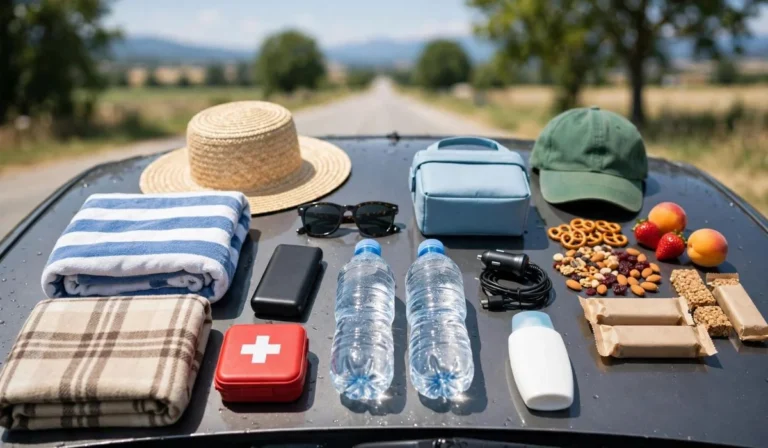
Food is one of the most practical road trip essentials. Having snacks and drinks in the car saves time and can be especially helpful when restaurants or stores are far away.
Best Road Trip Snacks
Choose foods that are easy to eat and unlikely to create a mess, such as:
- Granola bars
- Crackers
- Nuts
- Dried fruit
- Popcorn
- Pretzels
- Sandwiches
- Fresh fruit
- Protein bars
- Packaged snacks
For longer trips, use an insulated cooler to keep appropriate foods chilled.
Water and Hydration
Bring enough drinking water for the planned journey, particularly if you will travel through hot or remote areas. Reusable water bottles can reduce waste and make it easier to stay hydrated throughout the day.
The National Park Service’s Ten Essentials guide emphasizes hydration and recommends preparing water before it is needed.
Food safety is equally important. The CDC’s food and drink travel guidance recommends washing hands before eating or preparing food and using hand sanitizer containing at least 60% alcohol when soap and water are unavailable.
Clothing and Personal Comfort Items:
Long hours inside a vehicle can become uncomfortable if you do not pack suitable clothing.
Clothing Essentials
Pack clothing according to the destination and expected weather:
- Comfortable shirts
- Lightweight pants or shorts
- Underwear
- Socks
- Comfortable shoes
- Jacket or sweater
- Rain jacket
- Sleepwear
- Hat or cap
- Sunglasses
Always keep an extra change of clothes available. If you spill a drink, encounter unexpected rain, or need to change after an outdoor activity, having spare clothing can be extremely useful.
Comfort Items for Long Drives
Consider packing:
- Travel pillow
- Small blanket
- Eye mask
- Neck support
- Reusable water bottle
- Hand sanitizer
- Tissues
- Wet wipes
- Trash bags
- Seat-back organizer
A small trash bag is particularly useful for keeping food wrappers, tissues, and other waste under control.
Toiletries and Hygiene Essentials:
Personal hygiene becomes more important during long road trips, especially when traveling between multiple destinations.
Basic Toiletries
Pack a toiletry bag containing:
- Toothbrush
- Toothpaste
- Deodorant
- Face wash
- Shampoo
- Soap or body wash
- Hairbrush or comb
- Moisturizer
- Lip balm
- Sunscreen
- Hand sanitizer
- Tissues
- Wet wipes
Keep frequently used toiletries somewhere accessible rather than buried inside your main luggage.
Hygiene on the Road
Roadside stops may not always have ideal facilities. Carrying your own tissues, sanitizer, wipes, and basic toiletries can make rest stops much easier.
The CDC recommends regular handwashing during travel and advises using hand sanitizer with at least 60% alcohol when soap and water are unavailable.
First-Aid and Emergency Essentials:
A first-aid kit is one of the most important road trip essentials because minor injuries can happen anywhere.
What to Put in a First-Aid Kit
Your kit may include:
- Adhesive bandages
- Gauze
- Medical tape
- Antiseptic wipes
- Disposable gloves
- Tweezers
- Scissors
- Thermometer
- Pain-relief medication
- Allergy medication
- Personal medications
- Instant cold pack
Check expiration dates before every major trip and replace anything that is missing or expired.
The NPS recommends customizing a first-aid kit for the specific trip and carrying personal medications.
Emergency Communication
Your phone should be fully charged before departure. Carry a car charger and power bank so you have backup power.
For remote travel, consider whether your route has reliable mobile coverage. In particularly isolated areas, specialized emergency communication equipment may be appropriate. The NPS notes that cell service can be limited in remote locations.
Read Next: 10 Couple Vacation Ideas
Road Trip Essentials for Kids:
Traveling with children requires additional preparation because boredom, hunger, and discomfort can quickly make a long drive difficult.
Kids’ Road Trip Packing List
Pack:
- Snacks
- Water bottles
- Extra clothes
- Wet wipes
- Tissues
- Favorite toys
- Coloring books
- Activity books
- Headphones
- Tablet or entertainment device
- Chargers
- Small blanket
- Travel pillow
- Plastic bags for trash or motion sickness
Keep important items within the child’s reach, but avoid loose objects that could become dangerous during sudden braking.
NHTSA recommends that children ride properly restrained in age- and size-appropriate car seats or booster seats and notes that children under 13 should ride in the back seat.
Electronics and Entertainment:
Technology can make long road trips easier, but remember that electronics are only helpful when they have enough battery power.
Useful Road Trip Gadgets
Consider bringing:
- Smartphone
- Car charger
- Power bank
- Tablet
- Headphones
- Bluetooth speaker
- Camera
- Charging cables
- USB adapter
Keep spare cables organized in a small pouch so you do not have to search through luggage whenever a device needs charging.
Road Trip Entertainment Ideas
Not every activity needs a screen. Try:
- Road-trip trivia
- Word games
- Travel bingo
- Audiobooks
- Podcasts
- Music playlists
- Conversation games
- Photography challenges
- Journaling
- Scenery spotting
For families, games can make the journey itself part of the vacation.
Safety Essentials for Long-Distance Driving:
Safety should always come before reaching your destination quickly.
Seat Belts and Safe Driving
Everyone in the vehicle should wear a seat belt on every trip. NHTSA emphasizes that seat belts should be used regardless of where someone is sitting in the vehicle.
Avoid distracted driving, speeding, and driving while impaired. If you become tired, stop somewhere safe and take a break rather than trying to continue.
For long journeys, schedule regular stops to stretch, eat, rest, and recharge. NHTSA recommends taking breaks during long-distance trips.
Emergency Contact and Trip Plan
Before leaving, tell someone you trust about your route and expected arrival time. For remote adventures, provide details about your vehicle, route, activities, and expected return.
The NPS recommends leaving a trip plan with a trusted contact who is not traveling with you.
Road Trip Essentials for Different Types of Trips:
Not every road trip requires the same gear. Your packing list should match your destination and activities.
Weekend Road Trip
For a short trip, focus on:
- Basic clothing
- Toiletries
- Snacks
- Water
- Chargers
- Documents
- First-aid kit
- Emergency roadside kit
Family Road Trip
Families should add:
- Child car seats
- Extra clothes
- More snacks
- Entertainment
- Wipes
- Medicines
- Comfort items
- Activity supplies
Camping Road Trip
A camping-focused trip requires additional equipment, including:
- Tent
- Sleeping bags
- Camping stove
- Cooking equipment
- Headlamp
- Extra water
- Food
- Outdoor clothing
- First-aid supplies
- Navigation equipment
The NPS Ten Essentials framework is useful when adapting your supplies for outdoor activities.
Remote or Off-Road Road Trip
Remote routes require more preparation than normal highway travel. Carry additional water, food, fuel where appropriate, recovery equipment, navigation backups, and communication tools.
For challenging roads, research local conditions before departure and make sure your vehicle is suitable for the route.
How to Organize Road Trip Essentials?
Packing everything is not enough. You also need to organize your supplies so you can find them quickly.
Keep your emergency roadside kit in an easily accessible location. Store snacks and drinks where passengers can reach them safely. Put clothing and toiletries in separate bags or packing cubes.
A useful organization system is:
Front-seat area: phone, charger, sunglasses, maps, tissues, water.
Passenger area: snacks, entertainment, wipes, travel pillows.
Trunk: luggage, spare clothing, emergency kit, camping equipment.
Emergency-access section: first-aid kit, flashlight, jumper cables, tire equipment, and emergency supplies.
This setup prevents you from unpacking the entire vehicle when you need one small item.
Final Road Trip Essentials Checklist:
Before starting your journey, check that you have the basics covered:
- Vehicle inspected
- Tires checked
- Fuel or charging plan prepared
- Navigation downloaded
- Paper map packed
- Emergency kit packed
- First-aid kit packed
- Water available
- Food and snacks packed
- Important documents secured
- Chargers packed
- Clothing prepared
- Toiletries packed
- Weather checked
- Route reviewed
- Emergency contact informed
- Seat belts and child restraints checked
The goal is not to pack your entire home. The goal is to prepare for the situations most likely to affect your comfort and safety.
FAQs | Road Trip Essentials
What are the most important road trip essentials?
The most important road trip essentials include a roadside emergency kit, first-aid supplies, drinking water, food, navigation tools, chargers, important documents, appropriate clothing, and personal toiletries.
What should I keep in my car for a long road trip?
Keep a flashlight, jumper cables, tire pressure gauge, spare tire equipment, first-aid kit, water, nonperishable food, phone charger, emergency blanket, basic tools, and maps in your vehicle. NHTSA recommends many of these items as part of a roadside emergency kit.
How much food should I bring on a road trip?
Bring enough food for your planned travel time plus some extra snacks for unexpected delays. Choose nonperishable foods and use a cooler for items that need refrigeration.
Should I bring a paper map on a road trip?
Yes. Even if you use GPS, a paper map is a useful backup when your phone loses battery, GPS fails, or cellular service becomes unavailable. The NPS recommends carrying a backup paper map for outdoor trips.
What should kids bring on a road trip?
Children should have comfortable clothing, water, snacks, entertainment, headphones, wipes, a small blanket or pillow, and any necessary personal items. Make sure each child uses an appropriate car seat or booster seat.
How can I stay comfortable on a long road trip?
Wear comfortable clothing, stay hydrated, take regular breaks, keep the vehicle at a comfortable temperature, and use a travel pillow or blanket when appropriate. Avoid trying to drive for excessive periods without resting.
What should I do if my car breaks down?
Move to a safe location if possible, turn on your hazard lights, contact roadside assistance or emergency services when necessary, and use your emergency supplies. On remote roads, the safest action may be to remain with the vehicle while waiting for help, depending on local conditions. NPS guidance for remote roads emphasizes staying with the vehicle during emergencies because rescue may be delayed.