Travel To Porto | Best Attractions, Travel Tips and Things to Know
Travel to Porto is an experience filled with colorful riverside streets, historic architecture, dramatic viewpoints, traditional Portuguese food, and a relaxed atmosphere that feels different from many large European cities. Located along the Douro River in northern Portugal, Porto is famous for its historic center, tiled buildings, impressive bridges, atmospheric wine cellars, and beautiful coastal surroundings.
The city is perfect for travelers who enjoy destinations that can be explored slowly. Porto does not require an itinerary packed with dozens of attractions. Some of its best moments come from walking downhill through old streets, stopping at a small café, watching traditional boats move along the river, and enjoying sunset views from one of the city’s many viewpoints.
This complete guide to travel to Porto covers the best time to visit, transportation, famous attractions, local food, where to stay, travel costs, practical tips, and ideas for first-time visitors.
Why Travel to Porto?
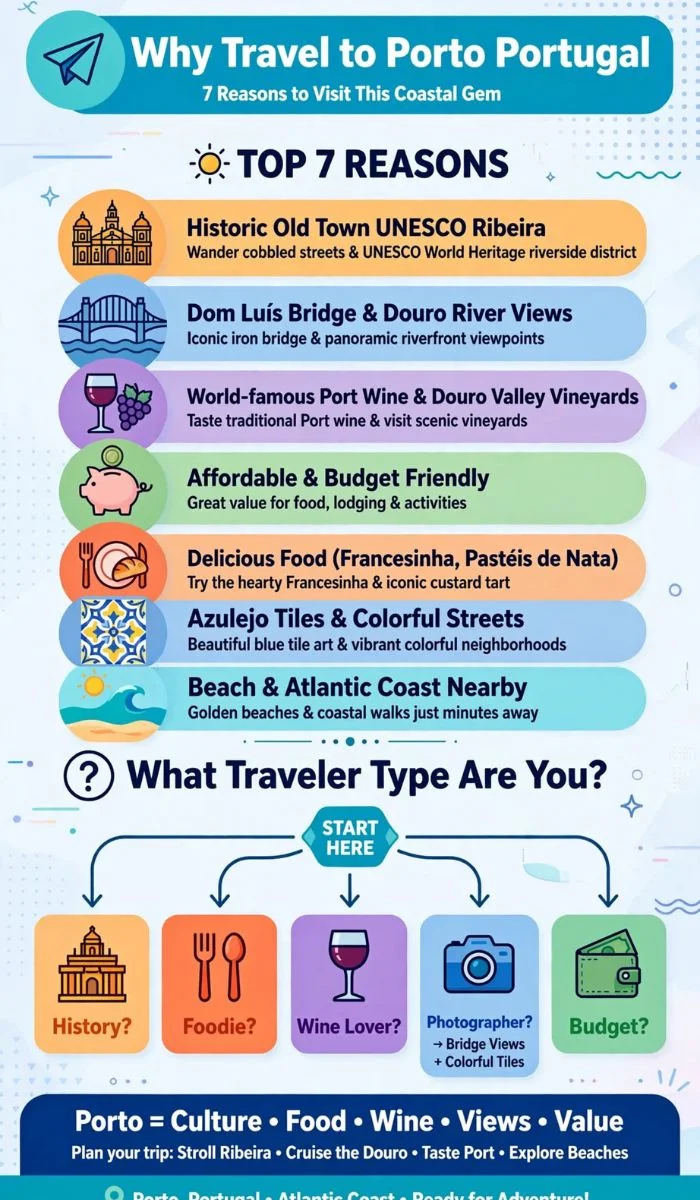
Porto is one of Portugal’s most distinctive destinations because of its combination of history, architecture, food, and river scenery.
The city is built across hills, which means travelers can discover impressive views throughout the day. Historic streets often lead unexpectedly toward viewpoints overlooking red rooftops, the Douro River, and the neighboring city of Vila Nova de Gaia.
Some of the main reasons to visit Porto include:
- Historic riverside neighborhoods
- The Douro River
- Colorful architecture
- Traditional Portuguese tiles
- Famous bridges
- Portuguese cuisine
- Wine culture
- Scenic viewpoints
- Beautiful day trips
- A relaxed city atmosphere
A City Built Around the River
One of the most important facts about Porto is the role of the Douro River in shaping the city’s identity.
The river has influenced Porto’s trade, architecture, transportation, and cultural life for centuries. Today, the waterfront remains one of the most enjoyable places for visitors to explore.
Travelers can experience Porto from several perspectives: walking beside the river, crossing historic bridges, exploring hilltop viewpoints, or taking a scenic boat journey.
Best Time to Travel to Porto:

Porto can be visited throughout the year, but the weather and atmosphere change with the seasons.
Spring: March to May
Spring is an excellent season for travel to Porto.
The weather gradually becomes warmer, and the city is comfortable for long walking days.
Spring is particularly suitable for:
- Exploring the historic center
- Walking along the Douro River
- Visiting viewpoints
- Taking day trips
- Enjoying outdoor cafés
Bring a light jacket because temperatures can change during the day.
Summer: June to August
Summer brings warm weather and a lively atmosphere.
The city becomes busier, particularly around famous attractions and the riverside.
Early morning and late afternoon are often the most comfortable times for walking through Porto’s steep streets.
Autumn: September to November
Autumn can be one of the best times for travelers who want pleasant temperatures and a slightly slower atmosphere.
September is often attractive for combining city sightseeing with trips through the Douro Valley.
Winter: December to February
Winter is cooler and can bring rain, but Porto remains enjoyable for travelers who prefer fewer crowds.
Museums, cafés, restaurants, and historic wine cellars provide plenty of indoor experiences.
How to Get to Porto:
Most international visitors arrive through Porto Airport.
The airport is connected to the city through public transportation and other transfer options.
Before Leaving the Airport
Check:
- Your accommodation location
- Public transportation routes
- Late-night arrival options
- Transfer prices
- Luggage arrangements
Saving your hotel address and transportation information before arrival can make your first journey easier.
How to Get Around Porto
Porto is a walkable city, but visitors should prepare for steep hills and uneven streets.
Walking is often the best way to experience the historic center, although public transportation can save energy when traveling longer distances.
Expect Hills and Stairs
One of the most important travel tips for Porto is to plan for elevation changes.
A short distance on a map may involve steep uphill streets or long staircases.
Comfortable walking shoes are essential.
Use Public Transportation Strategically
Trams, buses, and the Metro can be useful when traveling between more distant neighborhoods.
Use walking for exploring a specific area and public transportation when crossing longer sections of the city.
Start at Ribeira
Ribeira is Porto’s famous riverside district and one of the most atmospheric places in the city.
Colorful buildings line narrow streets leading toward the Douro River.
Best Way to Experience Ribeira
Visit during the morning for quieter walks.
Return in the evening when restaurants, cafés, and waterfront areas become more lively.
Take time to look upward while walking through the neighborhood because balconies and historic building details are part of its charm.
Cross the Dom Luís I Bridge
The Dom Luís I Bridge is one of Porto’s most recognizable landmarks.
It connects Porto with Vila Nova de Gaia and offers impressive views across the Douro River.
Walk for the Views
Crossing the bridge is more than simply traveling between two areas.
The route provides panoramic views of Porto’s historic center, riverside buildings, and the river below.
If you are uncomfortable with heights, choose your route carefully.
Explore Vila Nova de Gaia
Across the river from Porto, Vila Nova de Gaia offers some of the city’s most famous views.
The riverside is also known for historic wine cellars and tasting experiences.
A Different Perspective of Porto
One of the best reasons to visit Gaia is the panoramic view looking back toward Porto.
Spend time walking along the waterfront before moving uphill toward one of the area’s viewpoints.
Visit São Bento Station
São Bento Station is more than a transportation hub.
It is famous for its decorative tile panels, which tell stories connected to Portuguese history and culture.
Look Closely at the Tile Artwork
Even travelers who are not taking a train should consider visiting the station.
The interior is one of Porto’s most accessible examples of traditional Portuguese tile decoration.
Discover the Porto Cathedral Area
Porto Cathedral stands in one of the city’s historic areas and provides another excellent perspective on Porto’s architecture.
The surrounding streets are also worth exploring.
Follow the Historic Streets Downhill
From the cathedral area, visitors can walk toward different parts of the historic center.
Instead of taking the fastest route, explore side streets and staircases where you may find quieter scenes and interesting viewpoints.
Visit Livraria Lello
Livraria Lello is one of Porto’s most famous bookshops and a popular destination for visitors interested in literature and architecture.
Its historic interior has become internationally recognized for its distinctive design.
Plan Your Visit Carefully
The bookshop can become extremely busy.
Visit early or reserve your entry according to current requirements.
Allow time to enjoy the nearby streets as well, rather than making the bookshop your only activity in the area.
Explore Clerigos Tower and the Surrounding Streets:
Clerigos Tower is one of the landmarks that stands out in Porto’s skyline.
The surrounding neighborhood is filled with cafés, shops, historic buildings, and busy pedestrian streets.
A Great Area for an Afternoon Walk
Explore without rushing between landmarks.
This part of Porto is ideal for combining sightseeing with shopping, coffee stops, and casual street photography.
Find Porto’s Best Viewpoints
Porto has numerous viewpoints because of its hilly landscape.
These locations provide views over the river, bridges, historic rooftops, and neighboring hills.
Visit at Different Times of Day
Morning light, afternoon sunshine, and sunset can completely change the appearance of the city.
Choose one viewpoint during the day and another later in the evening for two different experiences.
Read Next: Travel To Tbilisi | Travel Tips and Things to Know
Try Traditional Portuguese Food:

Food is an important part of travel to Porto.
Northern Portuguese cuisine is often comforting, flavorful, and connected to local ingredients and traditions.
Popular foods to try include:
- Francesinha
- Bacalhau dishes
- Caldo verde
- Grilled seafood
- Portuguese pastries
- Local sandwiches
Try Francesinha in Porto
Francesinha is one of Porto’s best-known dishes.
It is rich and filling, making it a memorable choice for travelers who want to try something strongly associated with the city.
Because recipes can vary, trying the dish at a local restaurant can be part of the experience.
Experience Porto’s Café Culture
Porto is an excellent city for slow travel.
Cafés provide an opportunity to rest between long walks and experience everyday local life.
Slow Down Your Itinerary
Do not plan every hour of your day.
Leave space for:
- Coffee breaks
- Long lunches
- Riverside walks
- Unplanned streets
- Sunset viewpoints
Porto often becomes more memorable when travelers slow their pace.
Where to Stay in Porto
The best neighborhood depends on your travel style and how much walking you want to do.
Ribeira
Ideal for travelers who want historic surroundings and convenient access to the river.
The area can be busy and accommodation prices may vary depending on the season.
Baixa
A practical central location for first-time visitors.
Many attractions, restaurants, and transportation connections are within convenient reach.
Vila Nova de Gaia
A good option for travelers who want river views and a slightly different atmosphere from central Porto.
How Many Days Do You Need in Porto?
Three days is enough for many first-time visitors, while four or five days allows a slower experience and day trips.
A Three-Day Porto Itinerary
Day 1:
- Explore Ribeira
- Walk along the Douro River
- Cross Dom Luís I Bridge
- Visit Vila Nova de Gaia
- Watch the sunset
Day 2: - Visit São Bento Station
- Explore Porto Cathedral
- Visit Livraria Lello
- Walk around Clerigos
- Discover local cafés
Day 3: - Visit a museum or cultural attraction
- Explore quieter neighborhoods
- Try traditional food
- Take a scenic river experience
Best Day Trips from Porto
Porto is an excellent base for exploring northern Portugal.
The region offers rivers, vineyards, coastal towns, historic cities, and countryside landscapes.
Explore the Douro Valley
The Douro Valley is famous for its dramatic river landscapes and vineyard-covered hills.
A day trip can provide a completely different experience from Porto’s urban environment.
Plan transportation carefully because travel times can vary.
Visit the Atlantic Coast
Coastal destinations near Porto offer beaches, seafood, and ocean views.
A coast trip can be a relaxing addition to a busy city itinerary.
Budget Tips for Travel to Porto
Porto can offer good value compared with some major Western European destinations, but accommodation and popular tourist experiences may become more expensive during peak season.
Ways to Save Money
- Book accommodation early
- Walk between nearby attractions
- Use public transportation for longer distances
- Explore free viewpoints
- Eat away from the busiest tourist streets
- Choose a few paid attractions rather than trying to visit everything
Some of Porto’s best experiences, including riverside walks and exploring historic streets, are completely free.
Practical Tips for First-Time Visitors
A few simple preparations can make your trip more comfortable.
Wear the Right Shoes
Porto’s hills, cobbled streets, and staircases can be challenging.
Choose comfortable shoes with good support.
Plan Attractions by Area
Avoid crossing the city multiple times in one day.
Group attractions according to neighborhoods and explore each area slowly.
Keep a Flexible Schedule
Weather and unexpected discoveries can change your plans.
A flexible itinerary makes it easier to enjoy Porto without feeling rushed.
Safety Tips for Porto Travelers
Porto is a popular European travel destination, but visitors should still follow standard travel safety practices.
Stay Aware in Busy Areas
Keep personal belongings secure in crowded attractions, transportation areas, and busy streets.
Be Careful on Steep Streets
Some streets and staircases can become slippery during wet weather.
Walk carefully and wear suitable footwear.
Shopping and Souvenirs in Porto
Porto offers local crafts, food products, ceramics, artwork, and traditional souvenirs.
Choose Meaningful Souvenirs
Look for products connected to Portuguese craftsmanship or local culture.
Take time to compare prices and quality before purchasing expensive items.
Travel to Porto Beyond the Famous Attractions
The best Porto travel experiences often happen away from the busiest landmarks.
Walk into a quiet neighborhood, find a small café, listen to the sounds of the city from a viewpoint, or follow a street simply because it looks interesting.
Porto rewards curiosity.
A flexible traveler may discover colorful doors, hidden churches, small bakeries, and peaceful viewpoints that never appeared on the original itinerary.
Travel to Porto: Final Thoughts
Travel to Porto combines history, architecture, food, river scenery, and a relaxed Portuguese atmosphere. The city is ideal for travelers who enjoy walking, photography, cultural experiences, and discovering destinations at a slower pace.
For the best trip, balance Porto’s famous landmarks with free time. Explore Ribeira, cross the Dom Luís I Bridge, admire the tiled architecture, taste local food, and then leave room for the unexpected.
Whether you visit Porto for a weekend or stay several days to explore northern Portugal, the city offers a memorable combination of beauty, culture, and everyday charm.
FAQs About Travel to Porto
Is Porto worth visiting?
Yes. Porto is worth visiting for travelers interested in historic architecture, Portuguese food, river scenery, traditional culture, viewpoints, and a relaxed city atmosphere.
How many days should I spend in Porto?
Three days is enough for the main attractions, while four or five days allows more time for slower exploration and day trips.
What is the best time to visit Porto?
Spring and autumn are excellent for comfortable sightseeing, while summer offers warmer weather and a lively atmosphere.
Is Porto expensive for tourists?
Porto can offer good value compared with some major European cities, although accommodation and popular attractions may be more expensive during peak travel periods.
Can you walk around Porto?
Yes, Porto is highly walkable, but travelers should prepare for steep hills, stairs, and cobbled streets.
What is Porto most famous for?
Porto is famous for the Douro River, Ribeira district, Dom Luís I Bridge, tiled architecture, historic wine cellars, Portuguese food, and scenic viewpoints.
What food should I try in Porto?
Try francesinha, bacalhau dishes, caldo verde, seafood, Portuguese pastries, and other northern Portuguese specialties.
Is Porto good for first-time visitors to Portugal?
Yes. Porto is an excellent destination for first-time visitors because it offers history, culture, food, beautiful scenery, and a compact historic center.
What should I pack for Porto?
Pack comfortable walking shoes, weather-appropriate clothing, a light waterproof jacket, and a small bag for daily sightseeing.
Are three days enough for Porto?
Yes. Three days is enough to explore Porto’s major attractions, although staying longer allows a more relaxed experience and opportunities to visit the Douro Valley or Atlantic coast.